The American West on Kodak Ektachrome: Sedona to Zion
You read Kerouac enough times and eventually you stop making excuses about not having time for the road.
I had spent years looking at William Eggleston's Chromes — those saturated, hyper-real portraits of the American South rendered on slide film — and wondering what that same palette would do to the desert. Ektachrome in humid Memphis is one thing. Ektachrome in the dry, harsh light of Arizona and Utah is something else entirely.
In March 2026, I loaded a Leica MP with Ektachrome 100, flew from Miami to Phoenix, packed the family into a rental van, and drove to Sedona, through the Grand Canyon, up past Horseshoe Bend, and into southern Utah. Nine days. 1,600 miles. One camera. One lens. One film stock.
This is what the American West looks like on slide film — and what happens when the mythology actually delivers.
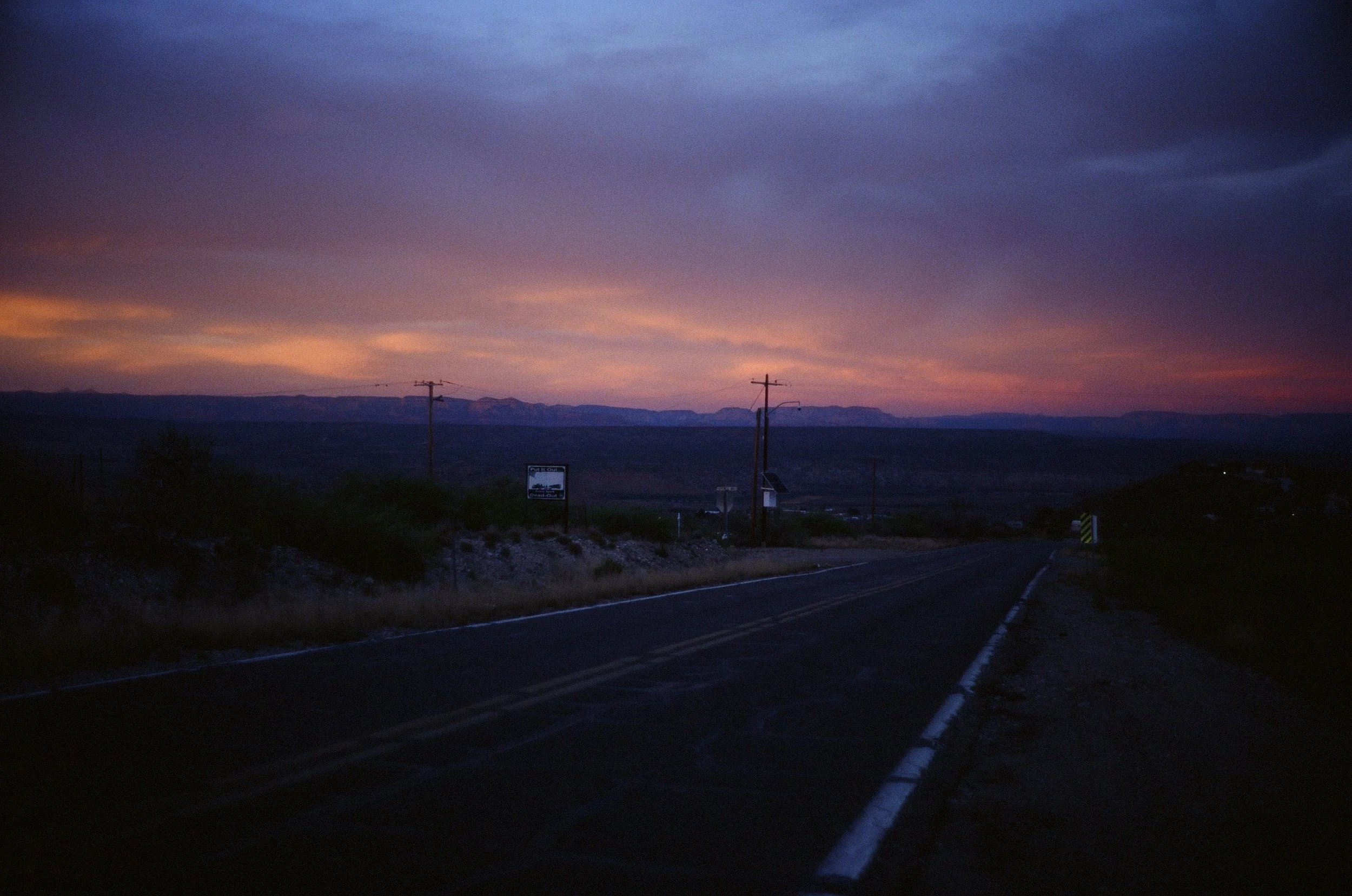
Quick Trip Reference
Dates: March 21–29, 2026
Flight: MIA to PHX on American Airlines
Route: Phoenix → Sedona (4 nights) → Grand Canyon National Park (day trip) → Horseshoe Bend → Orderville/Zion National Park (3 nights) → Scottsdale (Phoenix)
Camera: Leica MP (film)
Lens: Summilux 35mm f/1.4 ASPH steel rim reissue
Film: Kodak Ektachrome 100 (E-6 slide film)
Lab: Richard Photo Lab, California (standard E-6 process)
Total frames shot: 290 (8 rolls)
Why Ektachrome for the Desert
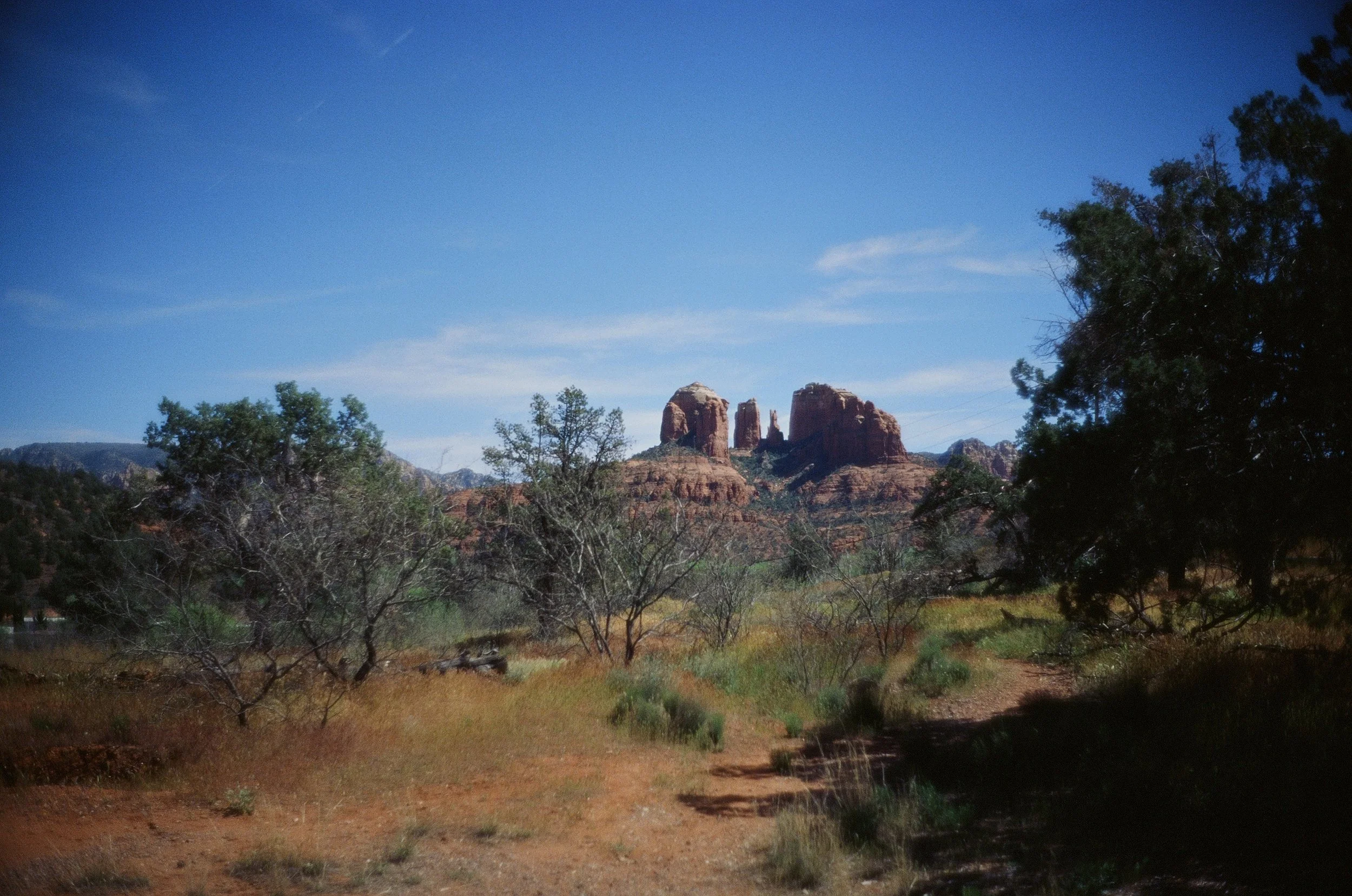
Ektachrome is a slide film. It renders color differently than negative film — more saturated, more contrasty, less forgiving. Eggleston shot Kodachrome and later Ektachrome because the saturation matched his vision of the American South. That humid, green, decaying palette.
The American West is the opposite. Dry. Red. Blue sky so intense it almost vibrates.
I wanted to see what Ektachrome would do to that.
The answer: it rendered the desert exactly as it looked. Not undersaturated. Not blown out. The reds in Sedona stayed red. The sky stayed impossibly blue. The rust on abandoned gas stations and vintage car junkyards stayed rust.
Slide film does not lie. It does not forgive bad exposure. It does not give you latitude to pull shadows or recover highlights in post. You meter carefully, you expose correctly, or you lose the shot.
I metered every frame. No sunny 16. No guessing. The Leica MP's built-in meter handled the desert light without issue. Ektachrome 100 at box speed, standard E-6 processing at Richard Photo Lab.
The scans came back exactly as expected. Clean. Sharp. Saturated. Film still delivers.
Sedona: The First Encounter
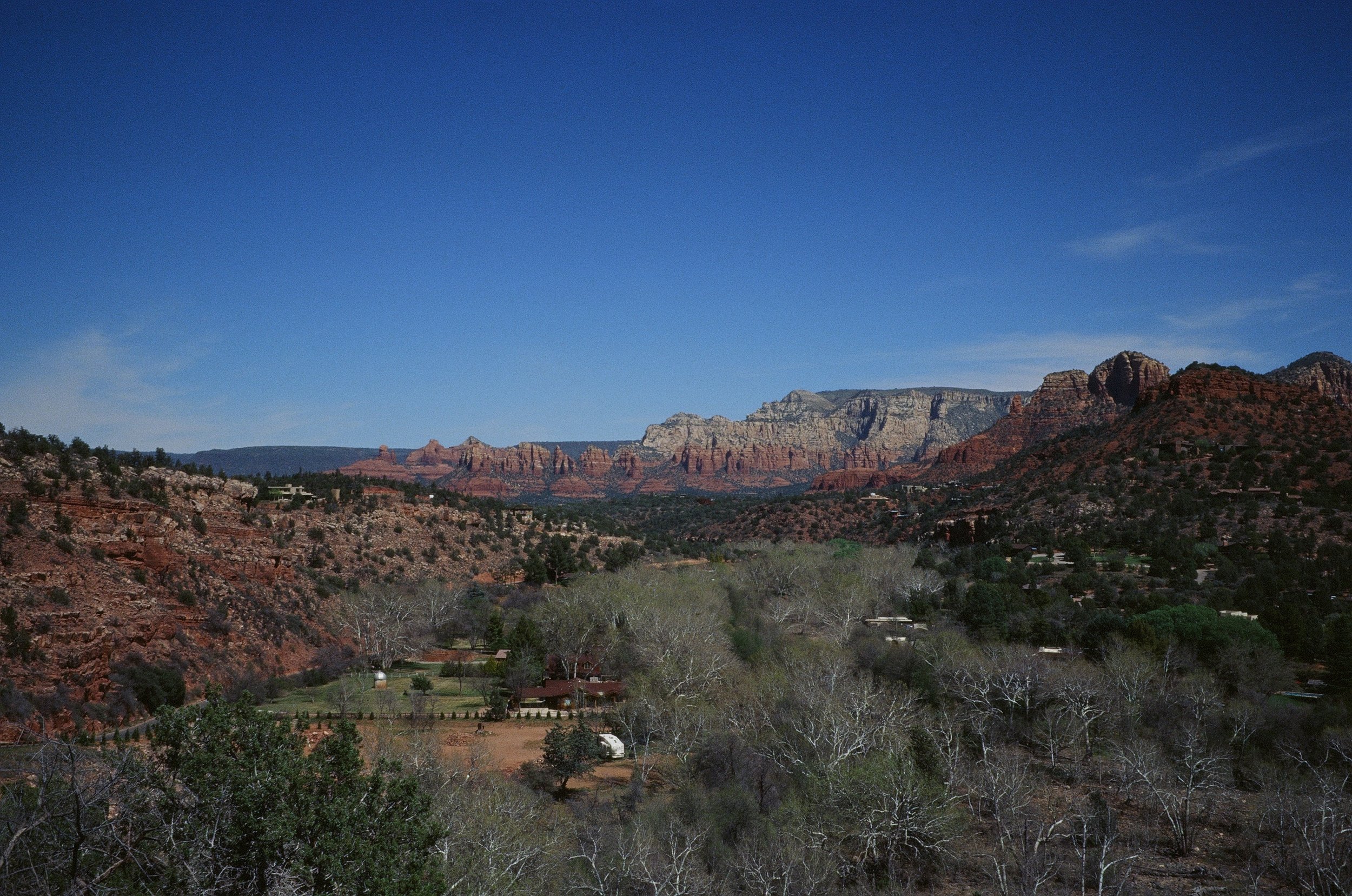
Sedona is tourist-heavy, Instagram-famous, and impossible to avoid if you are driving through northern Arizona. It is also legitimately stunning in a way that survives the hype.
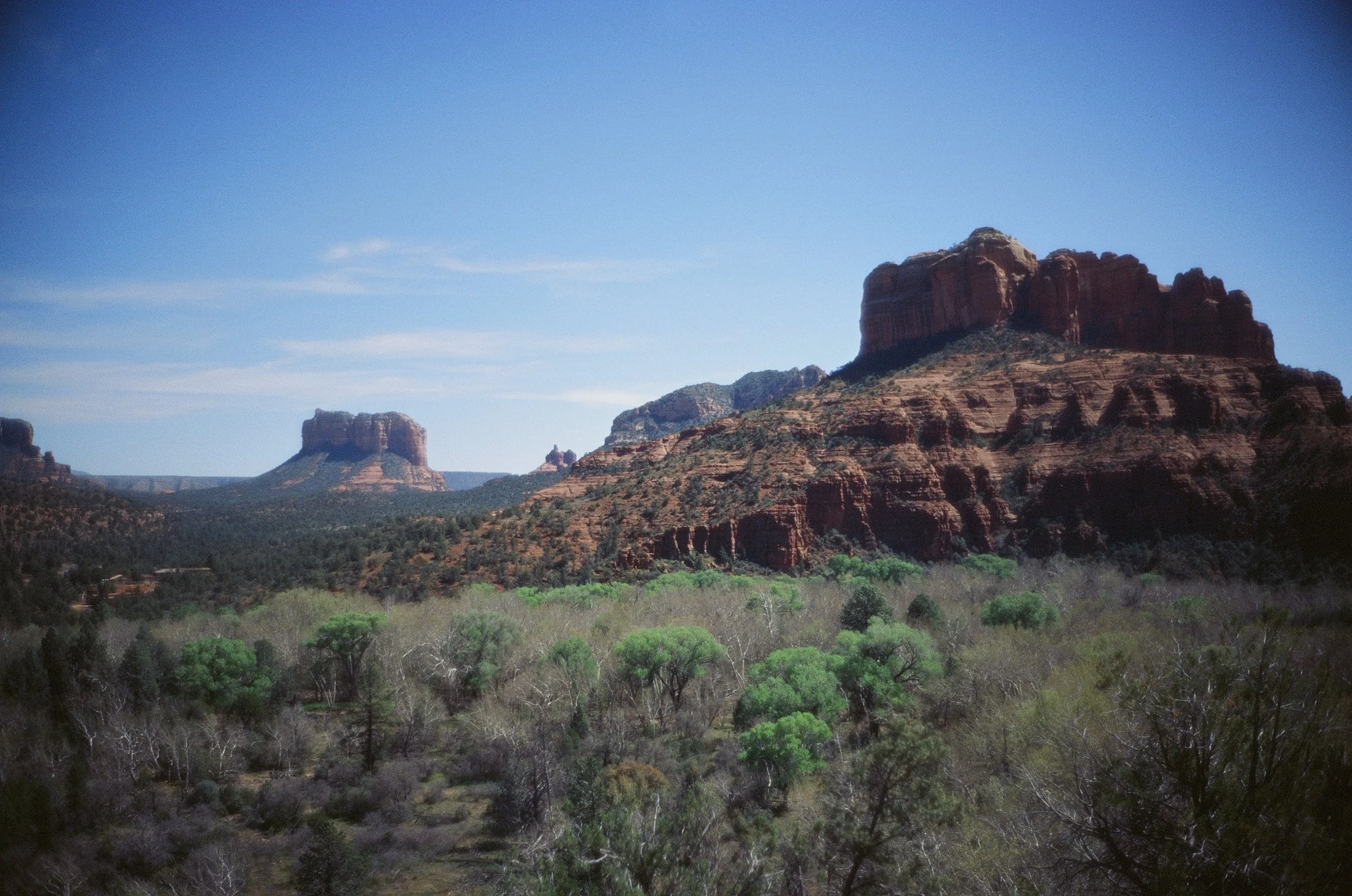
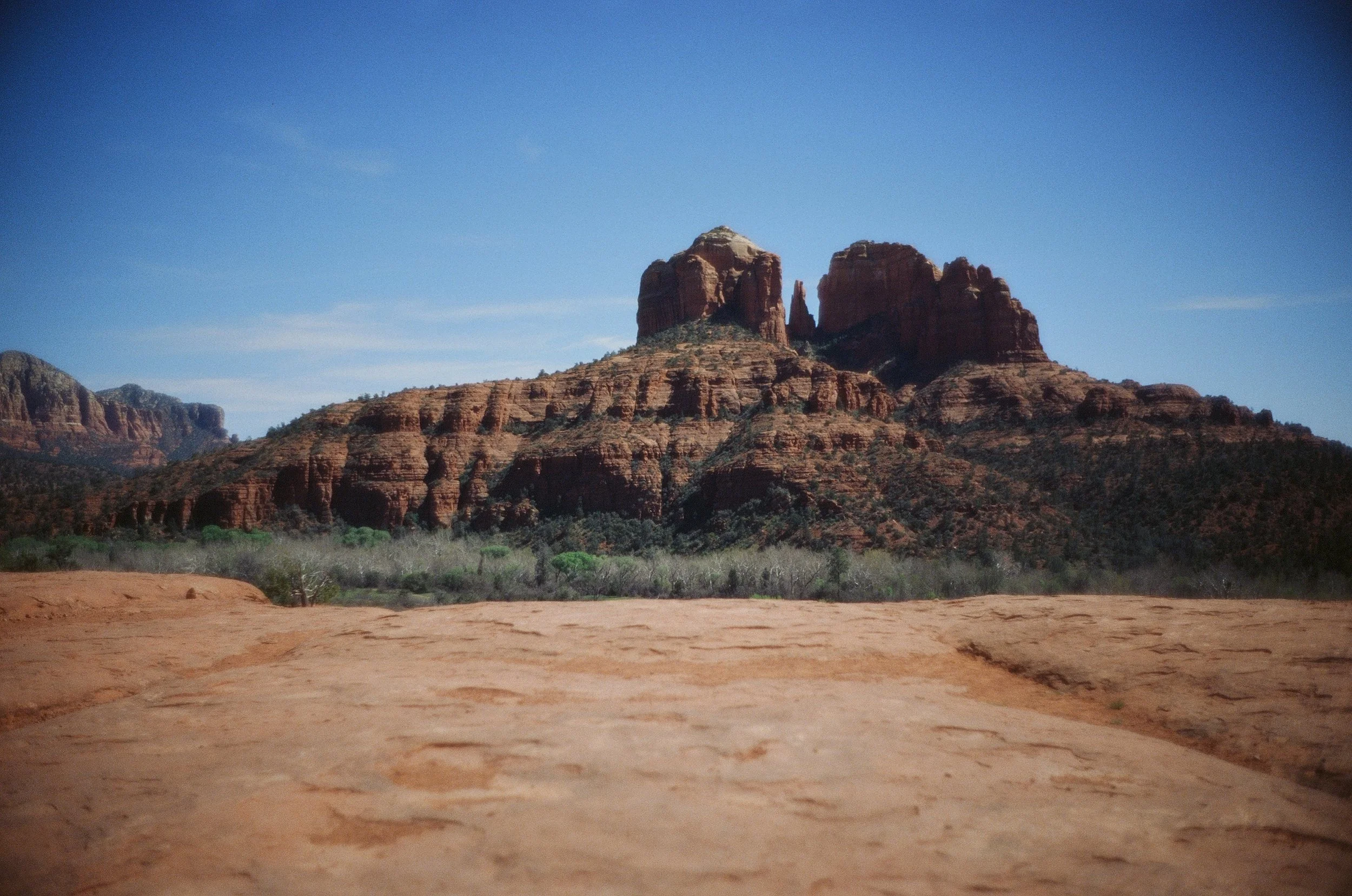
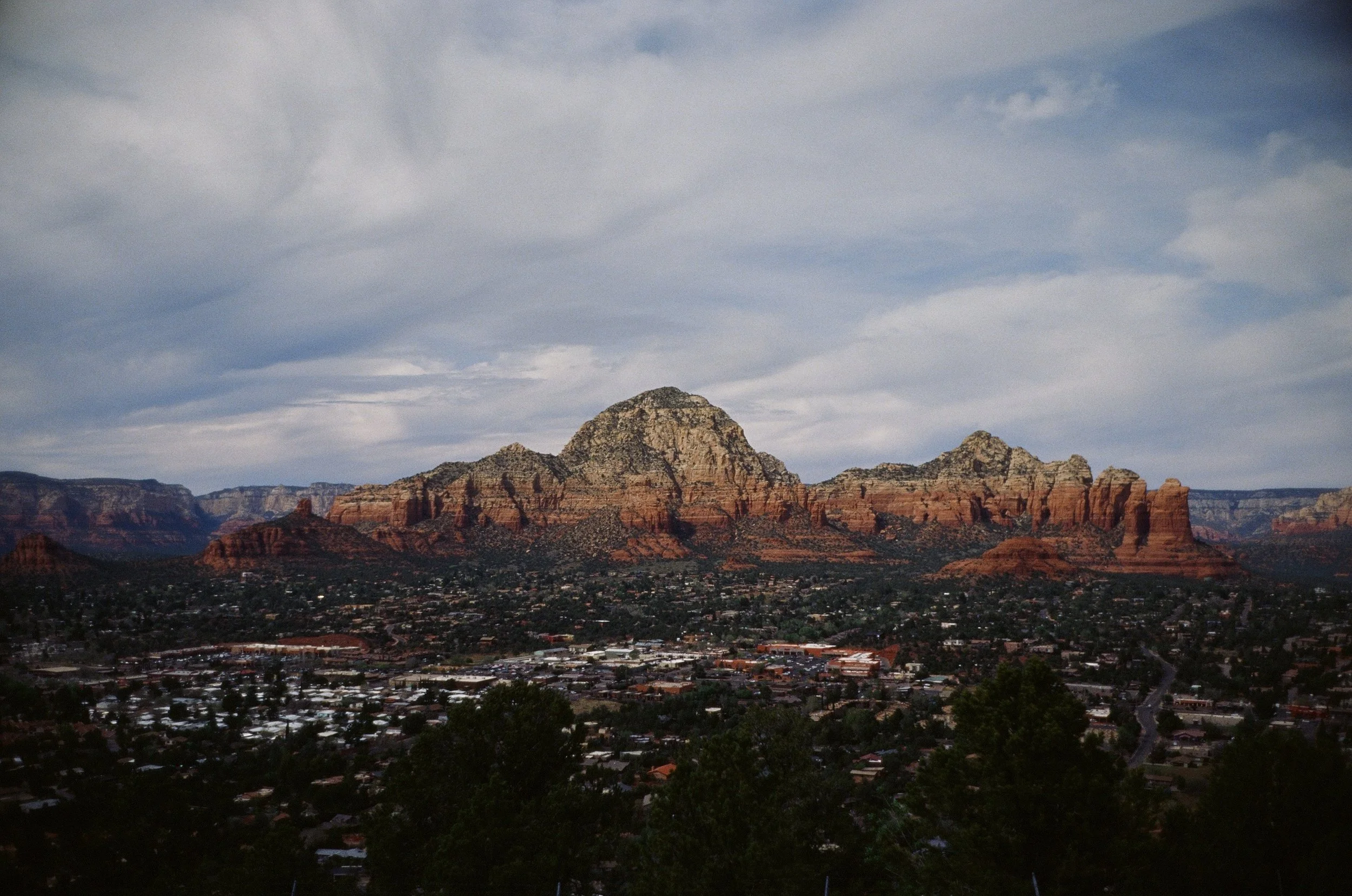
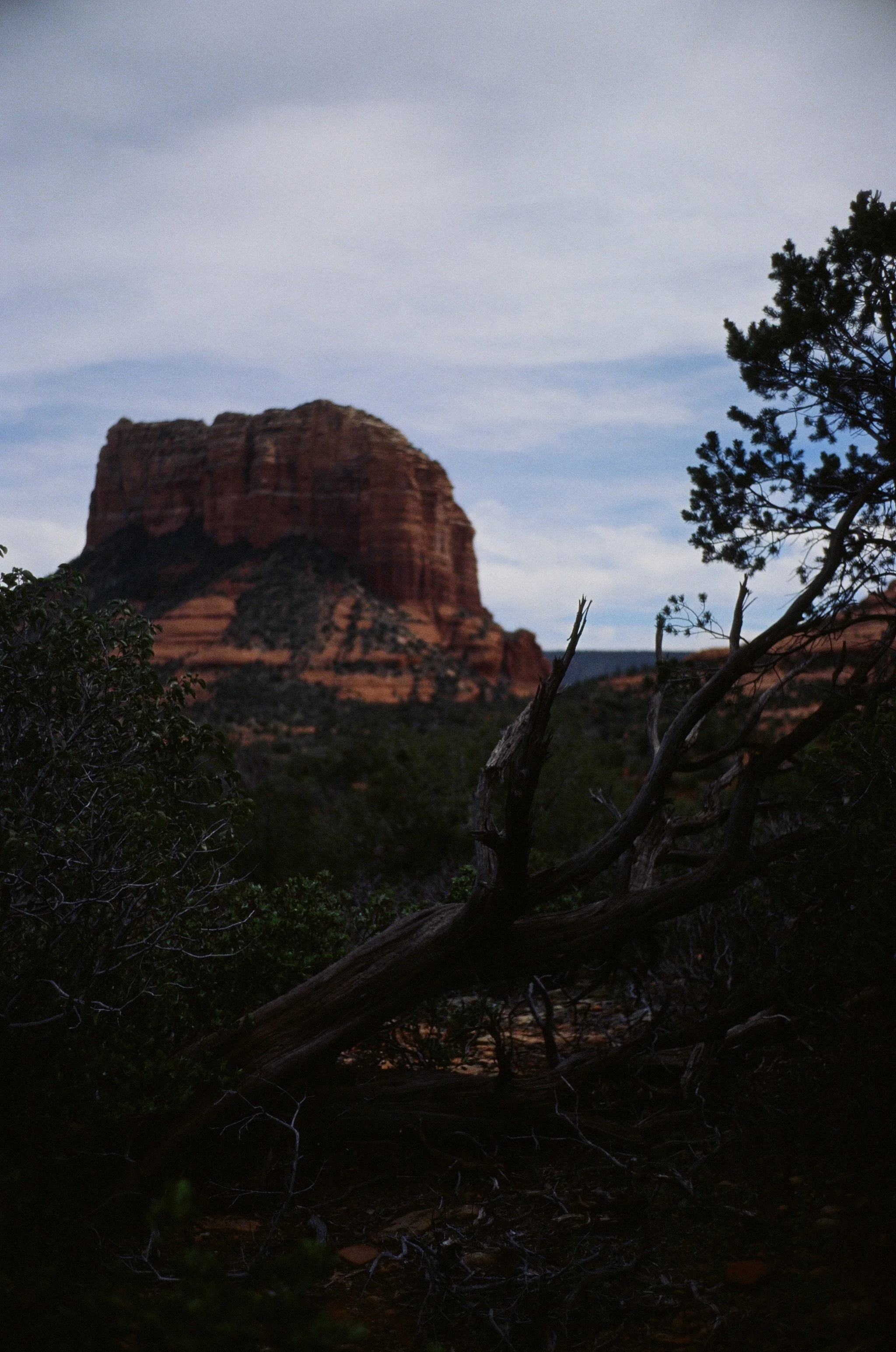
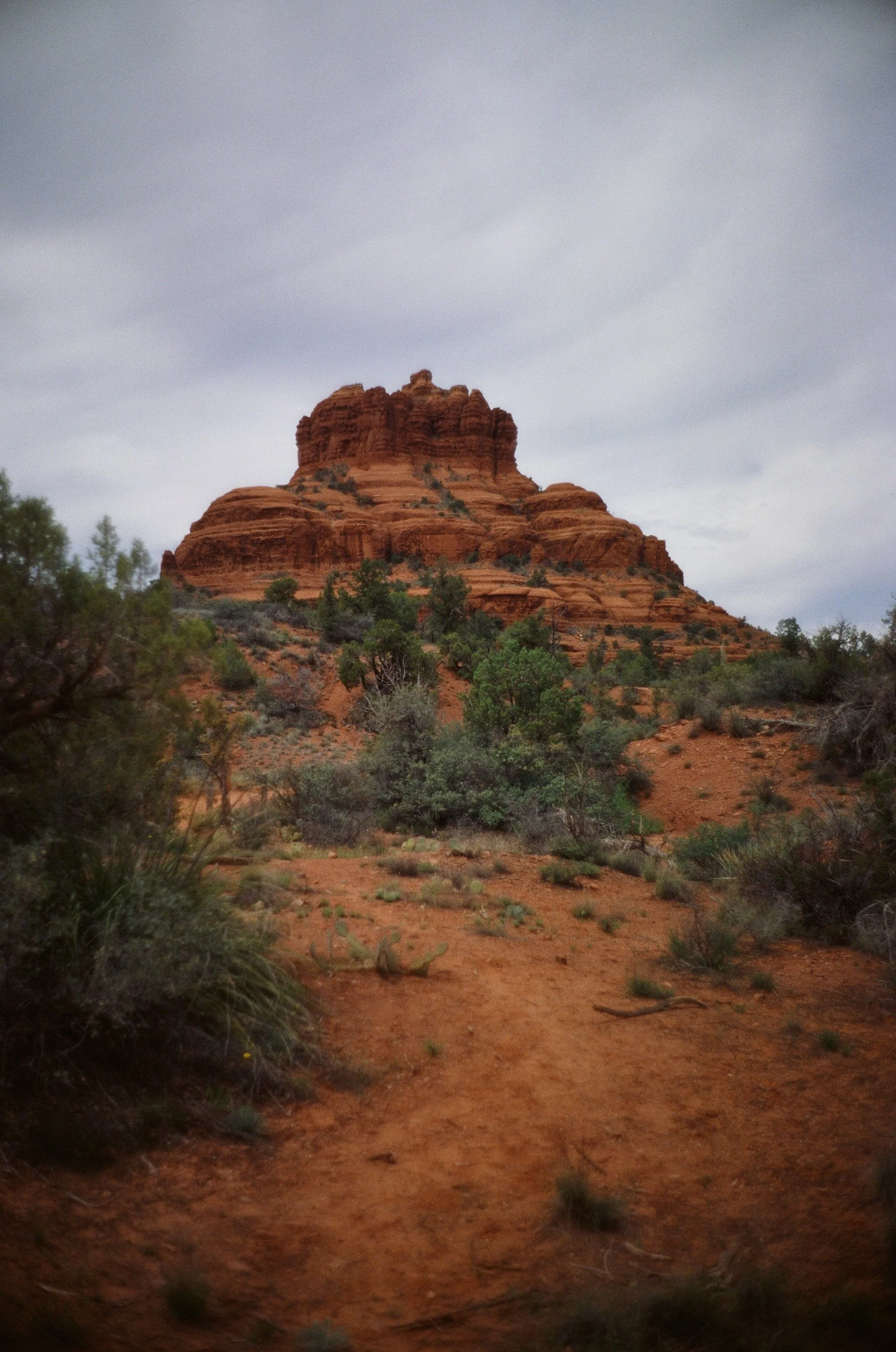
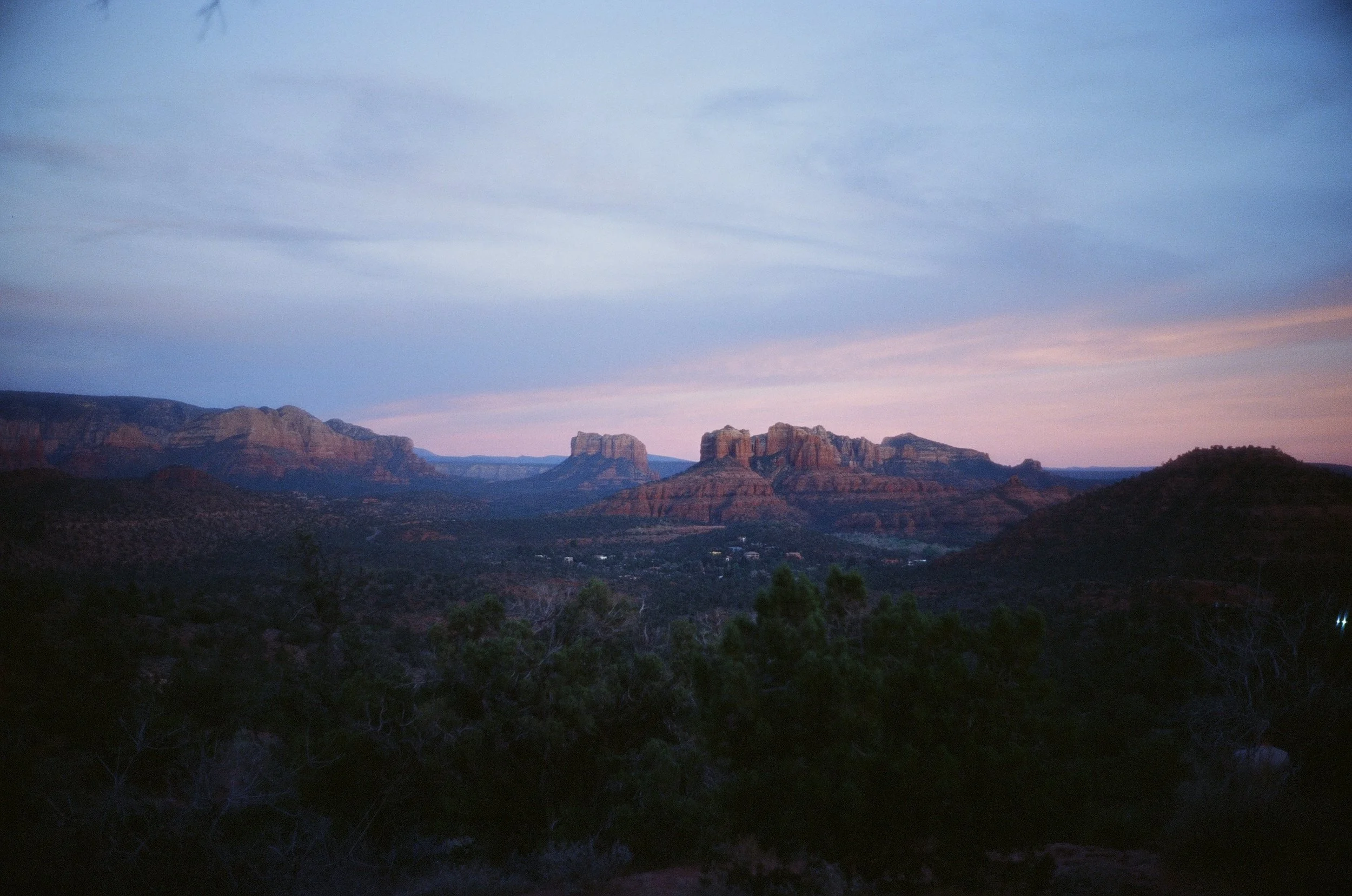
The red rocks are not subtle. They are massive, iron-rich formations that glow at sunrise and sunset. The light changes constantly. Shadows shift. The color temperature moves from cool blue to warm orange depending on the time of day.
Ektachrome handled it without hesitation.
I shot wide landscapes with the 35mm Summilux. The focal length was perfect — wide enough to capture scale, tight enough to isolate specific formations. The Leica's rendering gave the images a sharpness and three-dimensionality that matched the clarity of the desert air.
We stayed four nights in Sedona. I shot every morning and every evening. The kids hiked. My wife read and worked. My dad, the kids, and I drove backroads looking for vantage points and old signs.
Jerome: Ghost Town Vertical
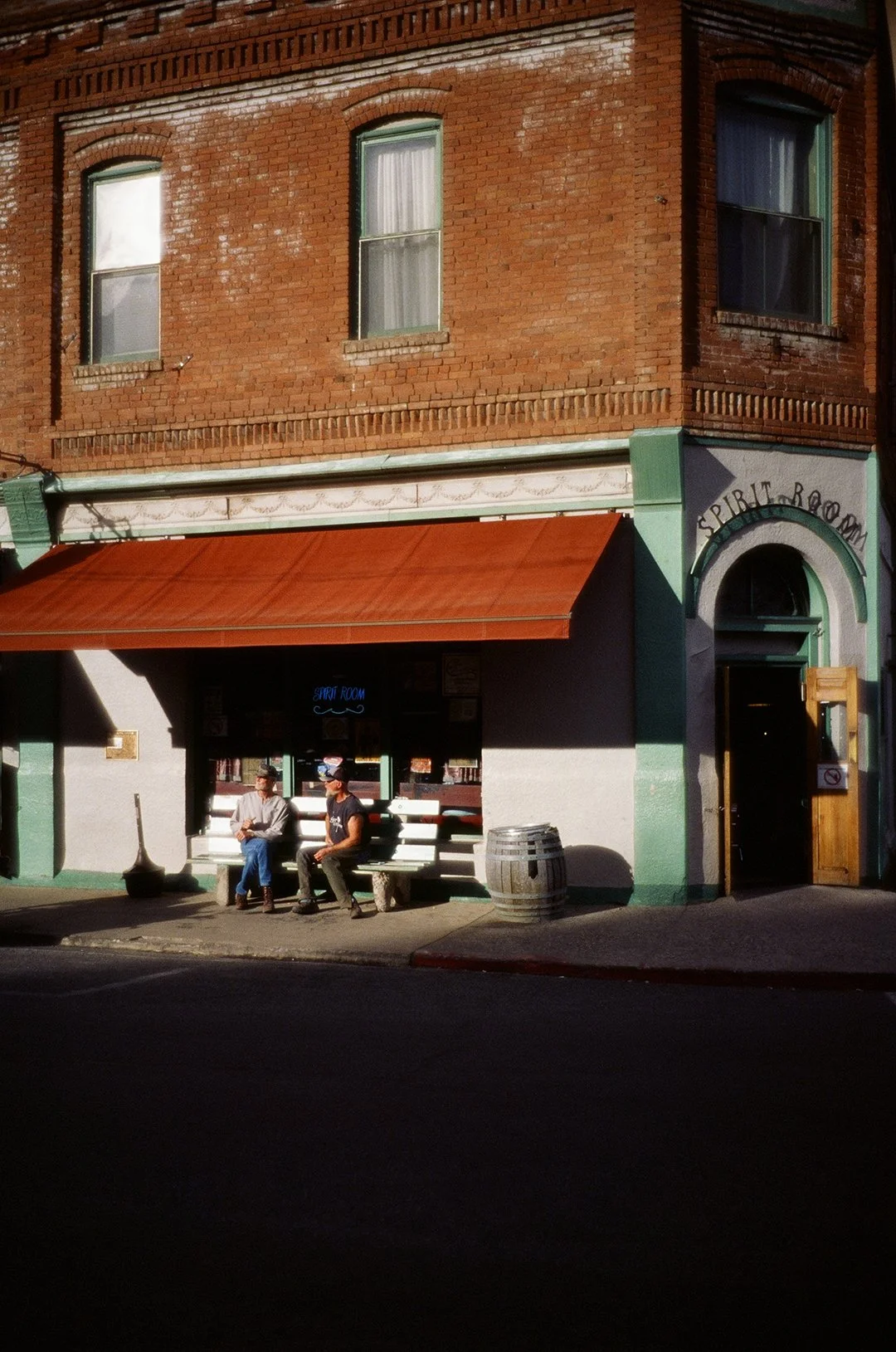
Jerome sits at 5,000 feet on the side of Cleopatra Hill. Former copper mining town. Population dropped from 15,000 to 50 after the mines closed in 1953. Now it's artists, galleries, and buildings that refuse to collapse.
The main street climbs steep. Old brick storefronts. Mint green trim. Orange awnings. The kind of saturated, everyday Americana that I am in love with.
I walked the street when the afternoon light hit hard. Shadows cutting across facades. Two people on a bench outside the Spirit Room. The colors looked exactly like what Ektachrome was made to render.
One frame. Metered for the highlights. Let the shadows go black. Committed.
Grand Canyon: The Cliché That Delivers
The Grand Canyon is the most photographed natural landmark in the United States. It has been shot on every format, every film stock, every digital sensor ever made. It is a visual cliché.
It is also undeniable.
The Grand Canyon South Rim was full. Spring break crowds. Families everywhere, primarily West Coast families. Overlook platforms designed for maximum throughput.
None of that mattered once I looked over the edge.
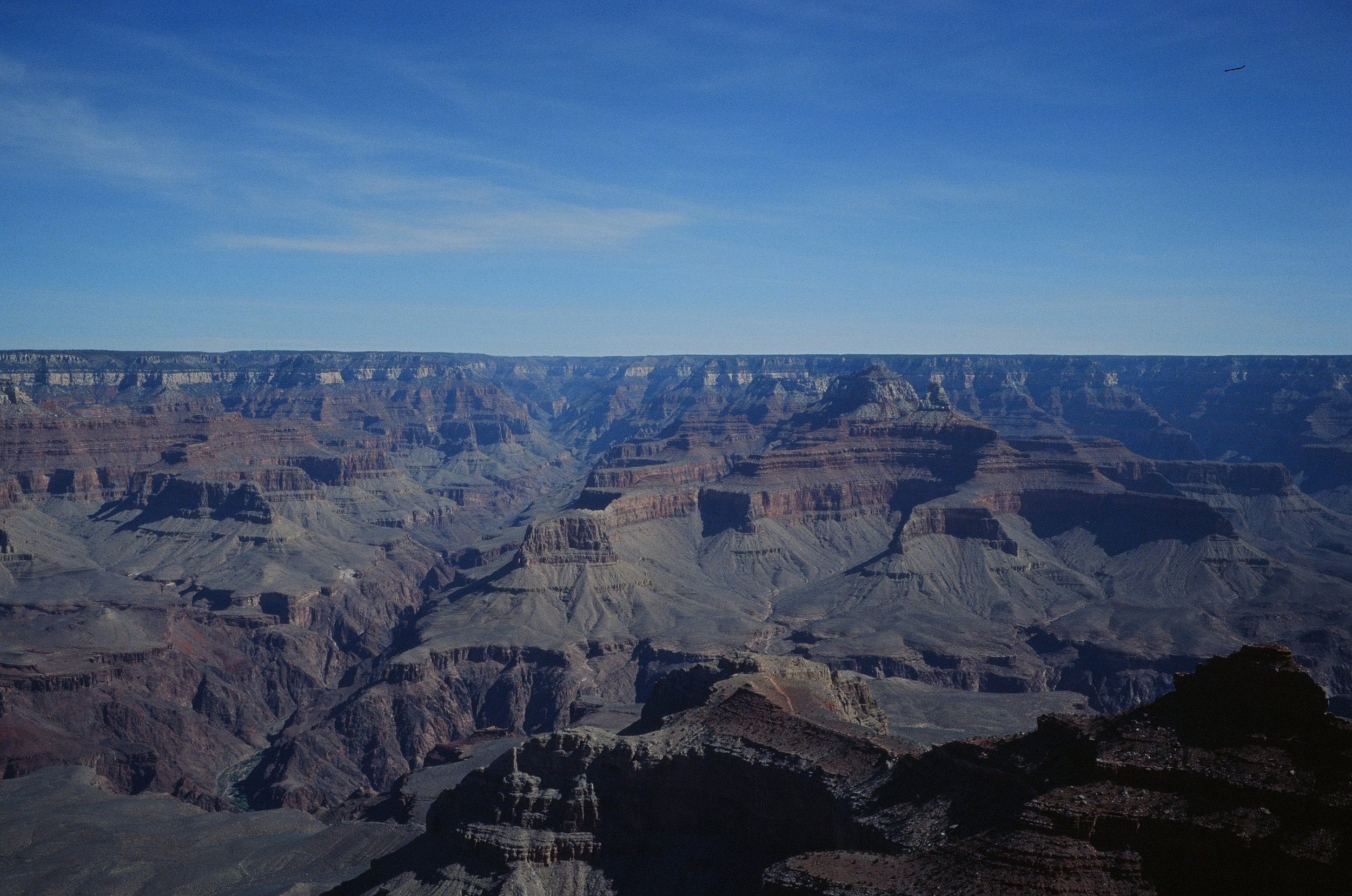
The scale is incomprehensible. The canyon does not fit in a viewfinder. It does not translate to a photograph. You stand there and realize that no image will ever capture what you are seeing, and you shoot anyway because what else are you going to do.
Ektachrome compressed the depth into layers of color — red, orange, purple, blue. The shadows went dark. The highlights stayed controlled. The film did what it was supposed to do: render the scene as accurately as possible within the limitations of a two-dimensional medium.
Route 66
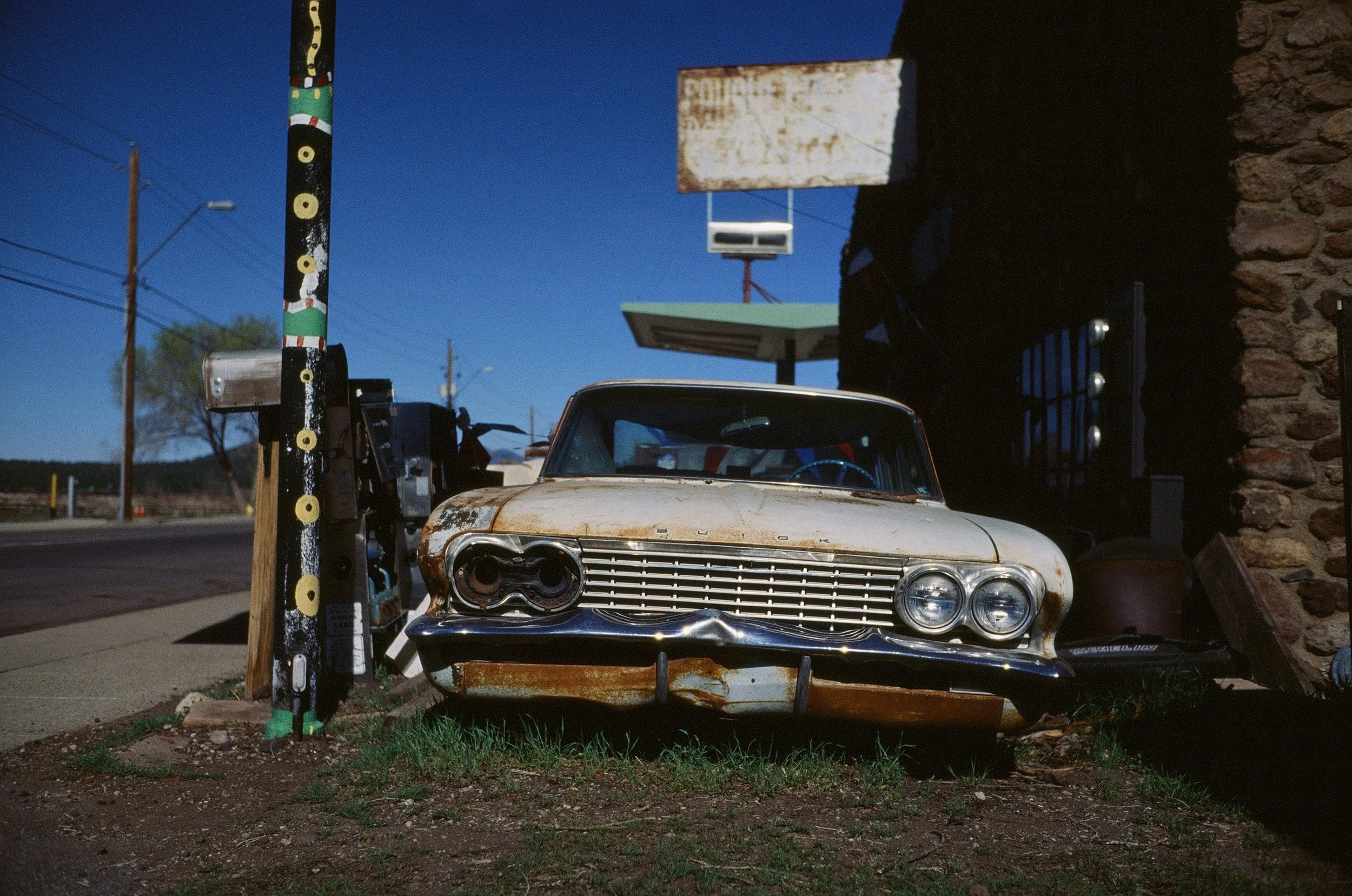
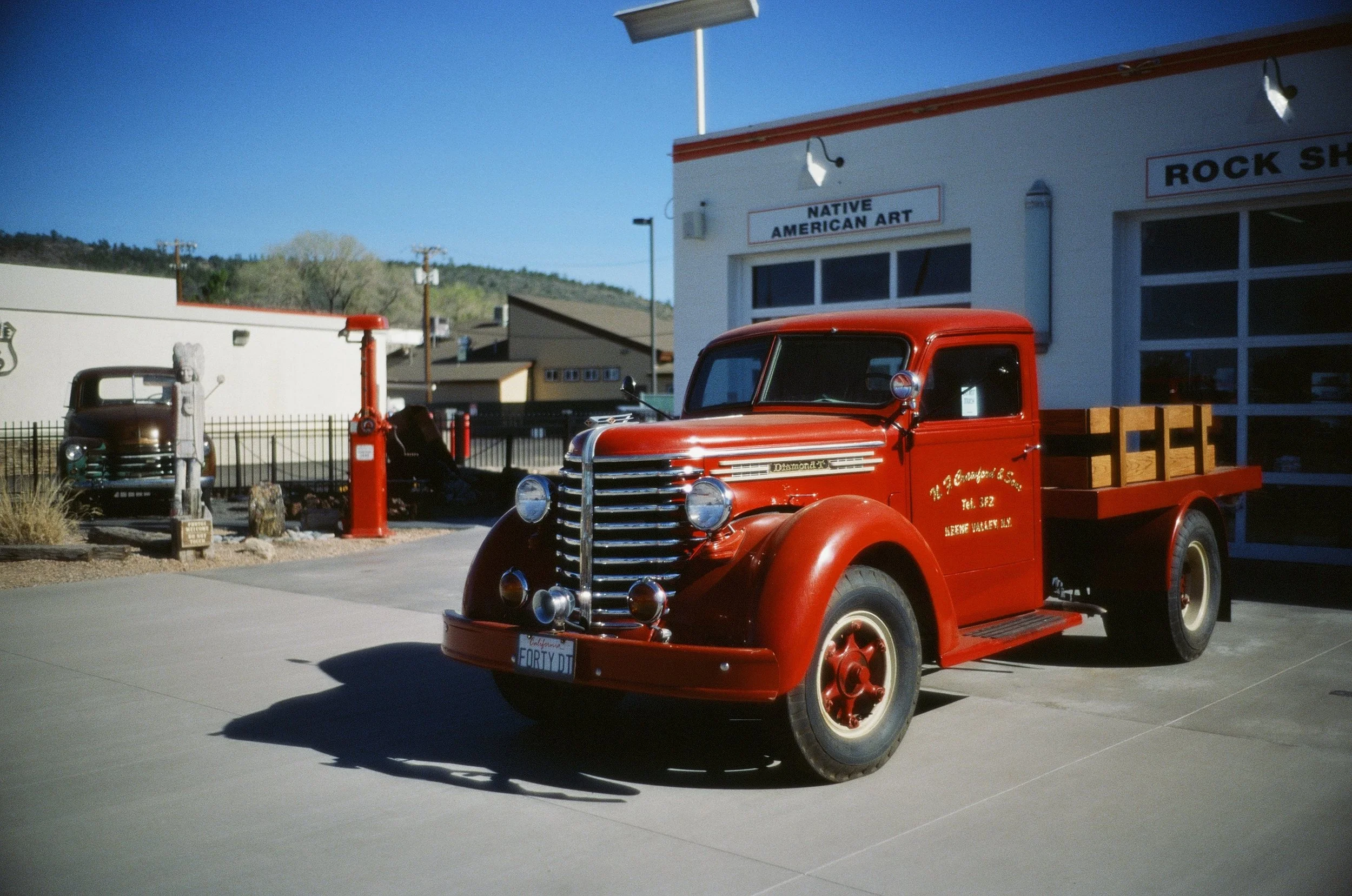
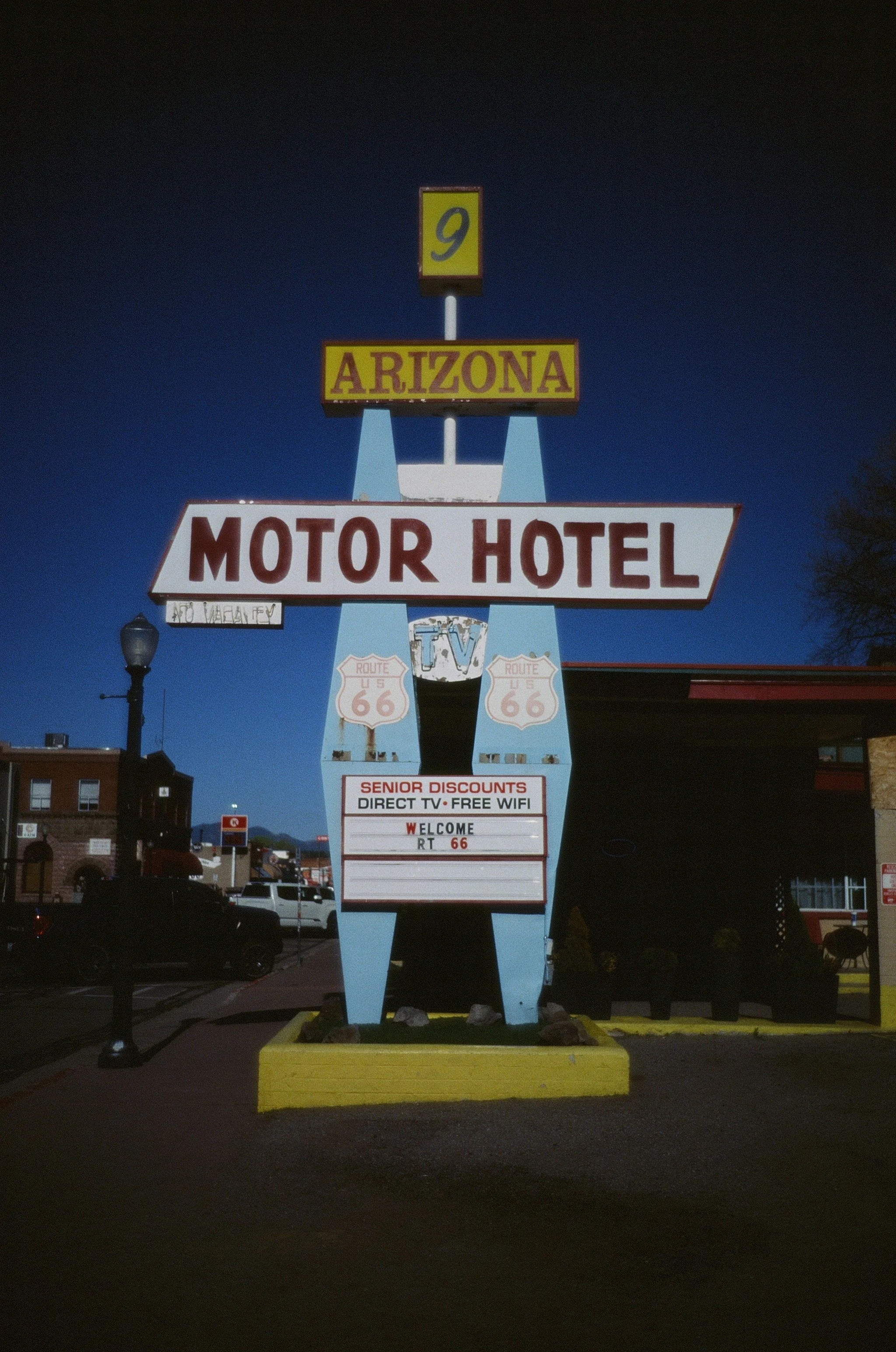
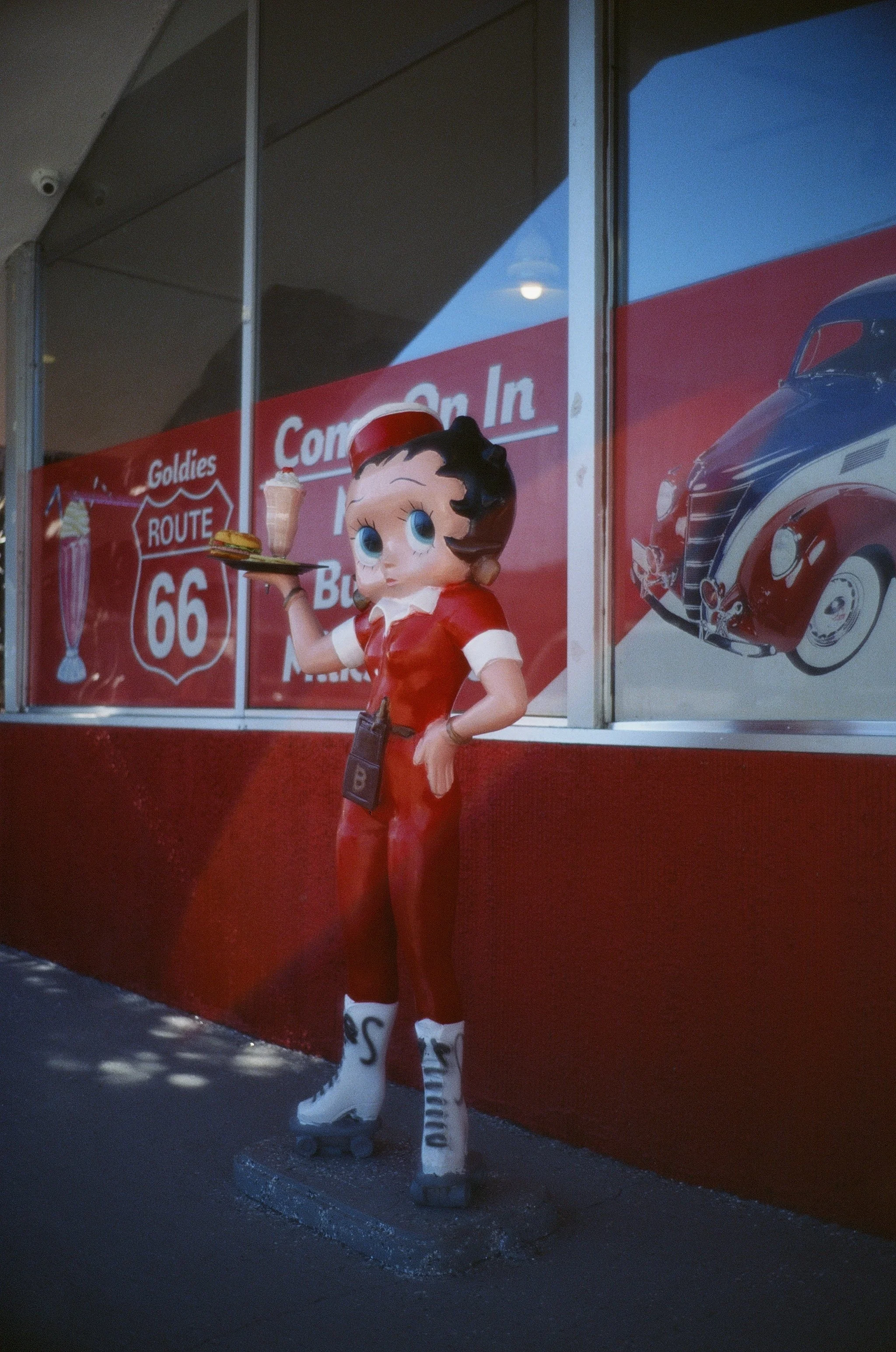
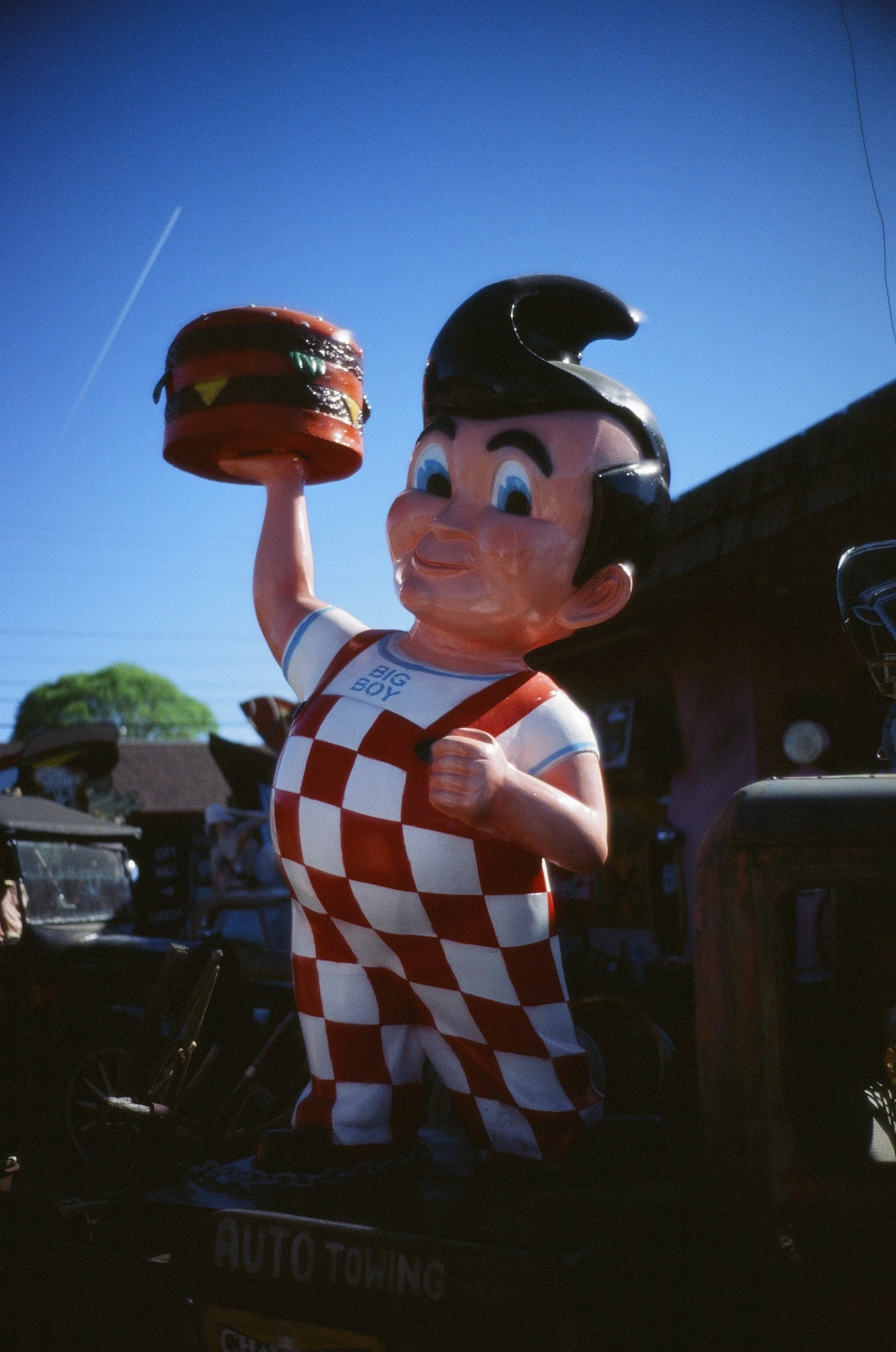
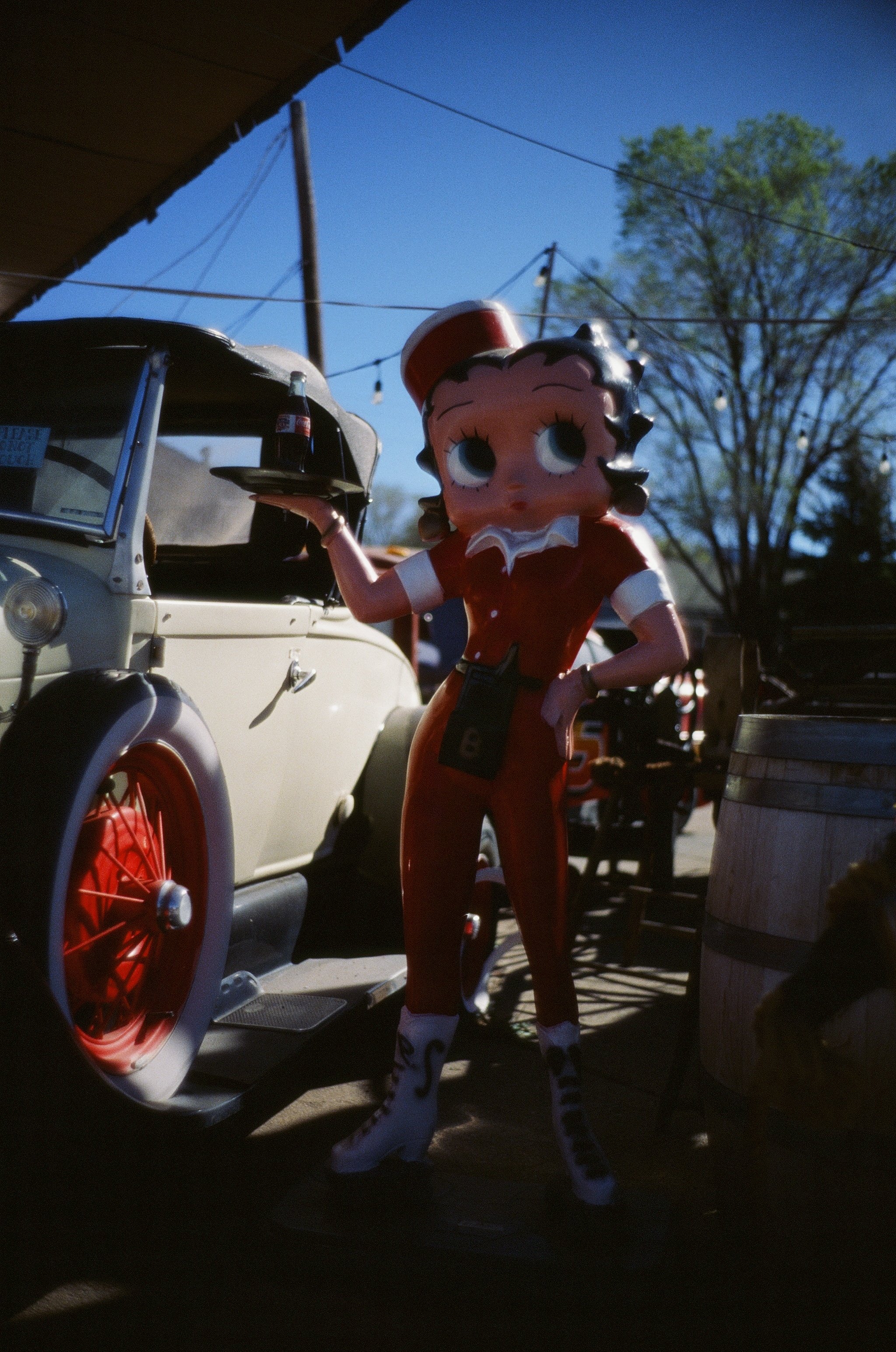
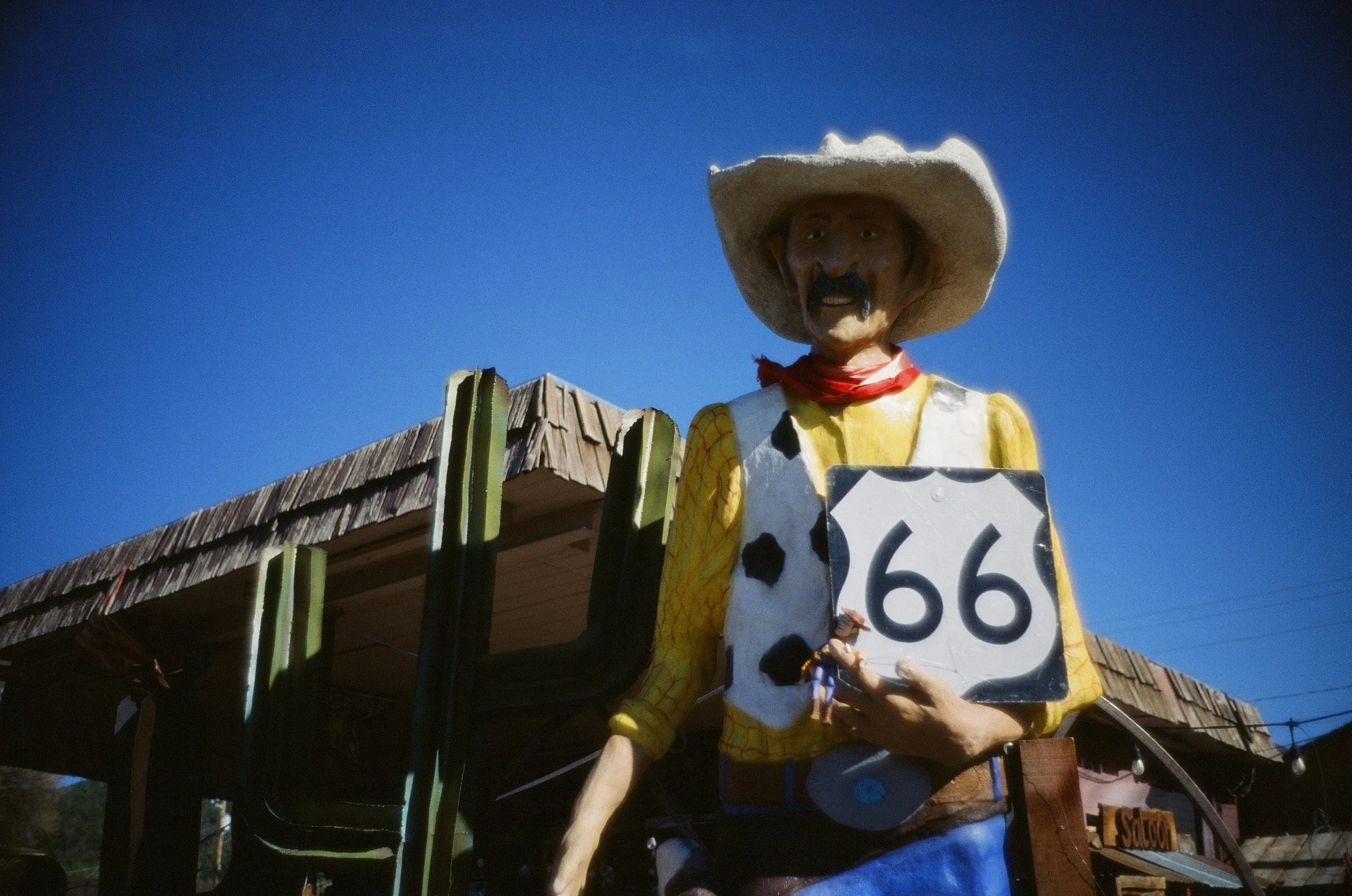
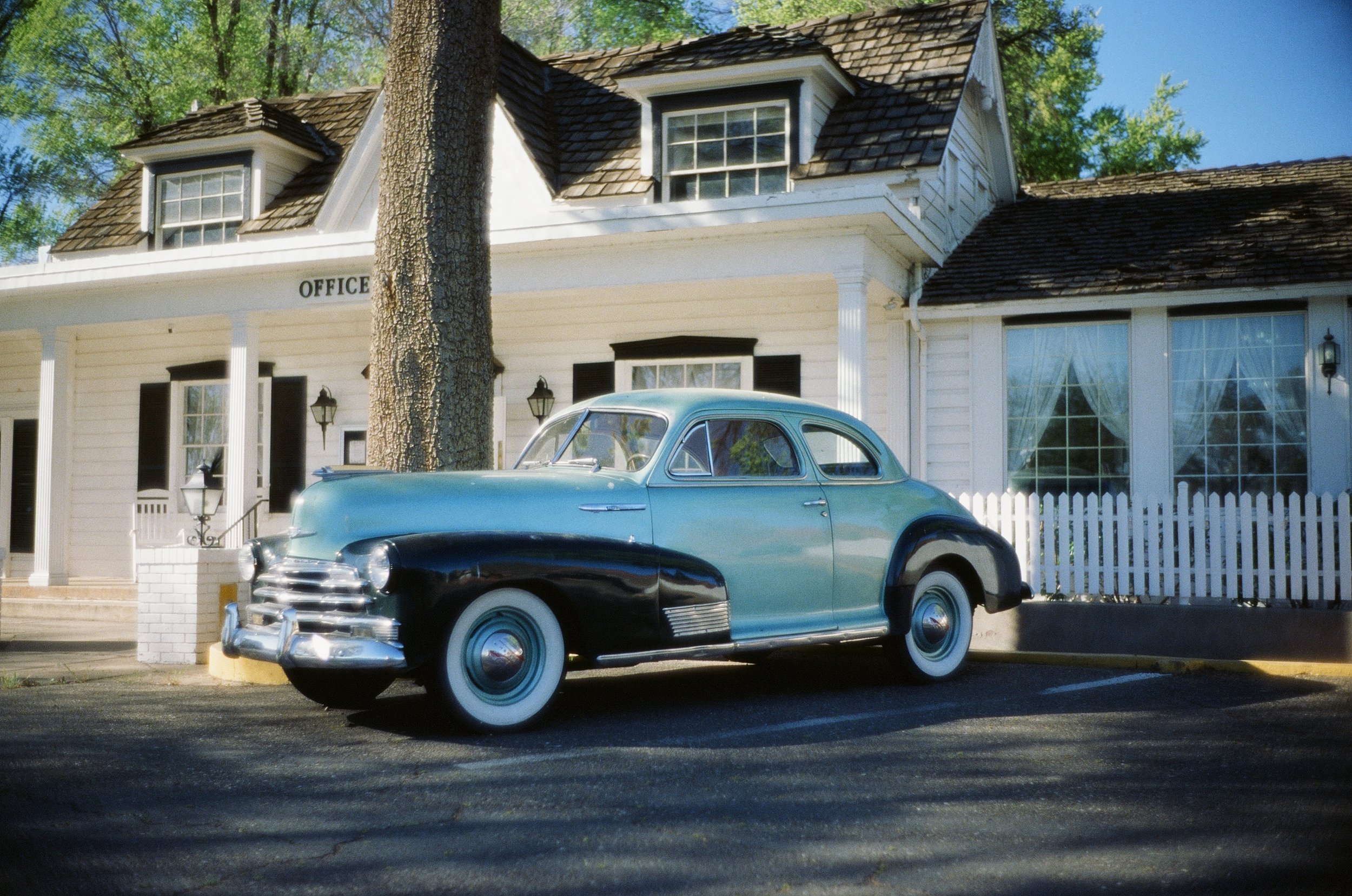
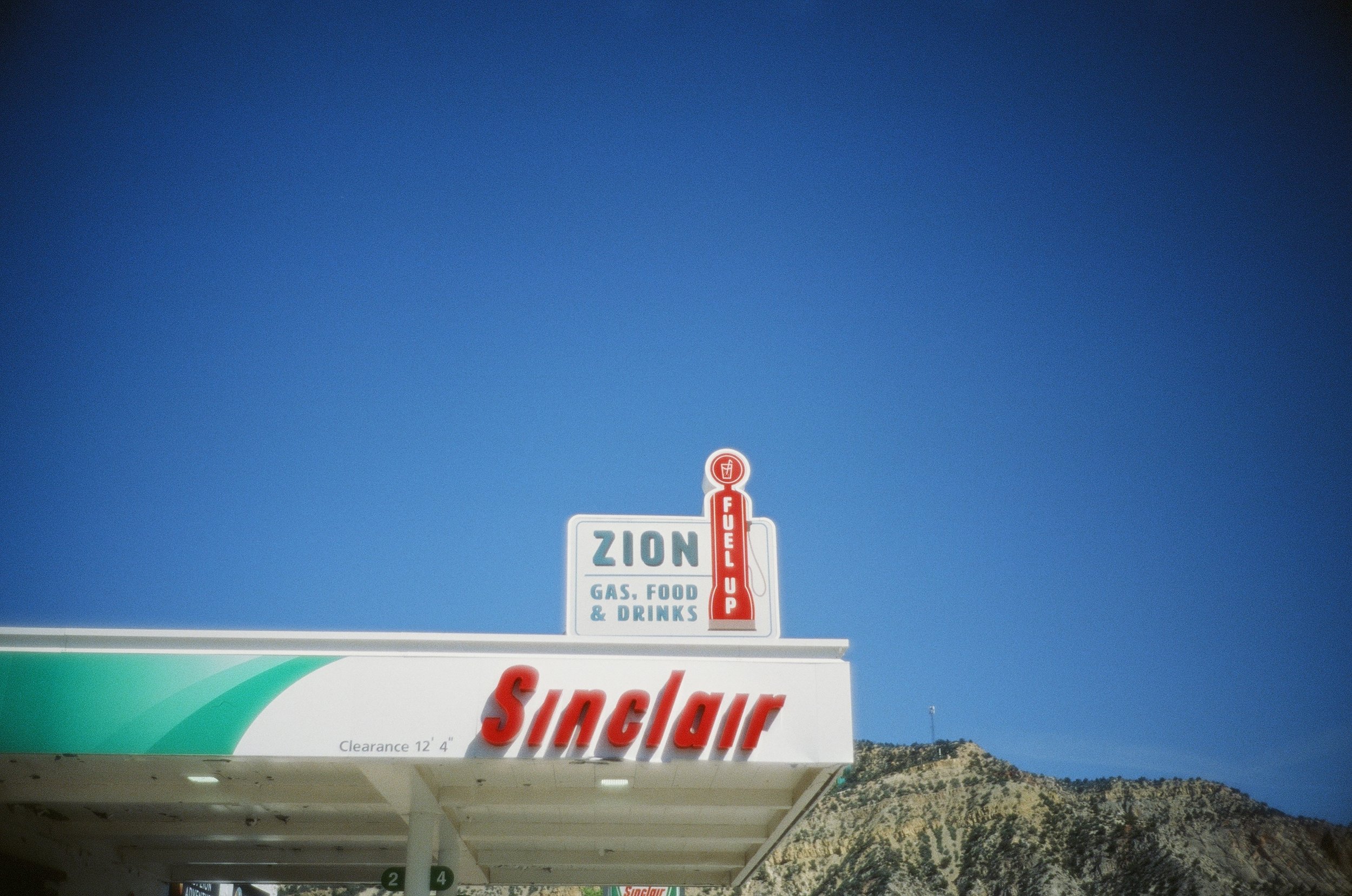
On the drive back to Sedona, we passed through Williams, Arizona — a Route 66 town that still trades on nostalgia and roadside kitsch. Old motels. Diners with neon signs. Gas stations frozen in the 1950s. The kind of Americana that Eggleston would have stopped for.
The Drive North: Meditative Highway and Roadside Finds
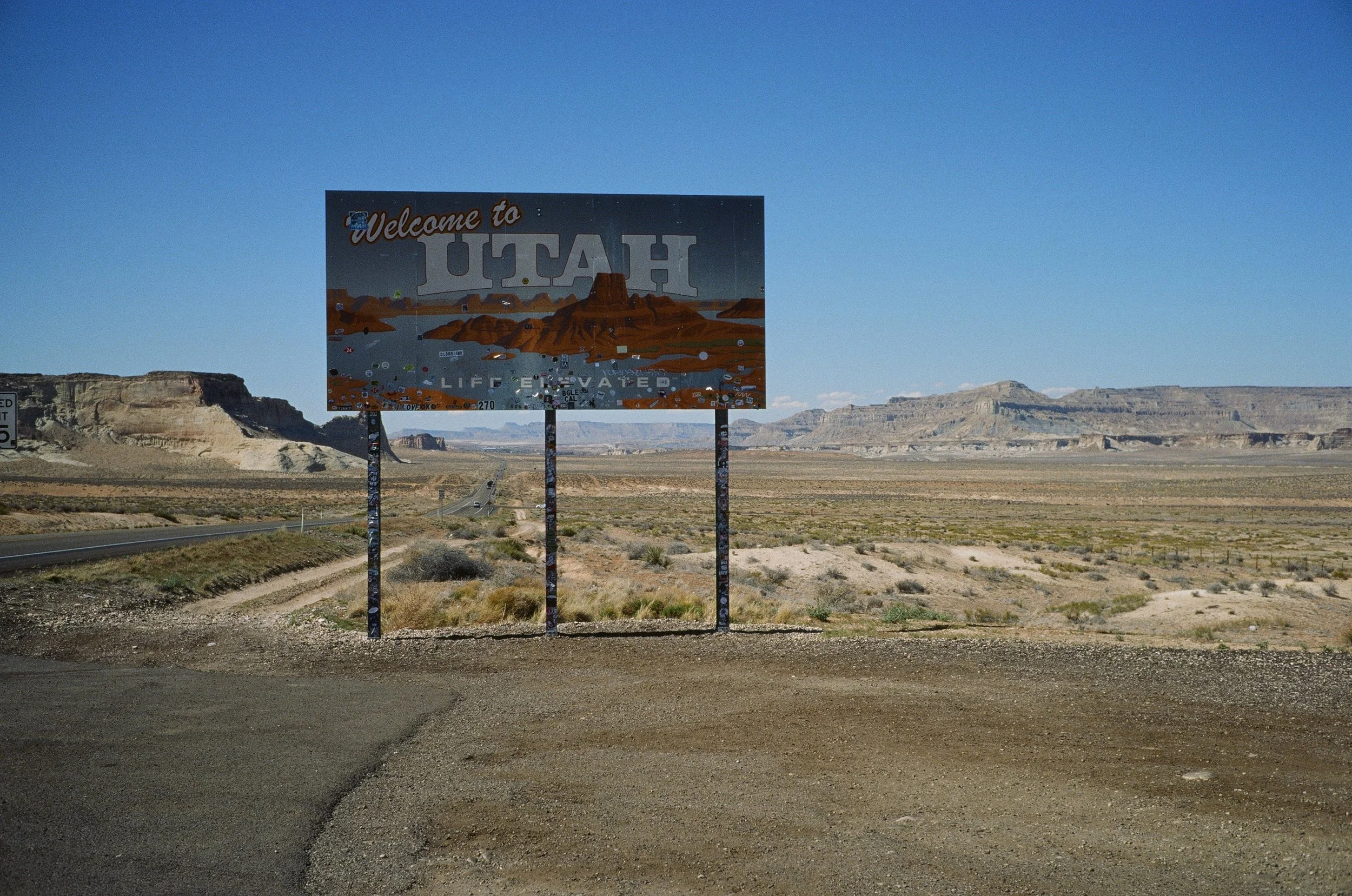
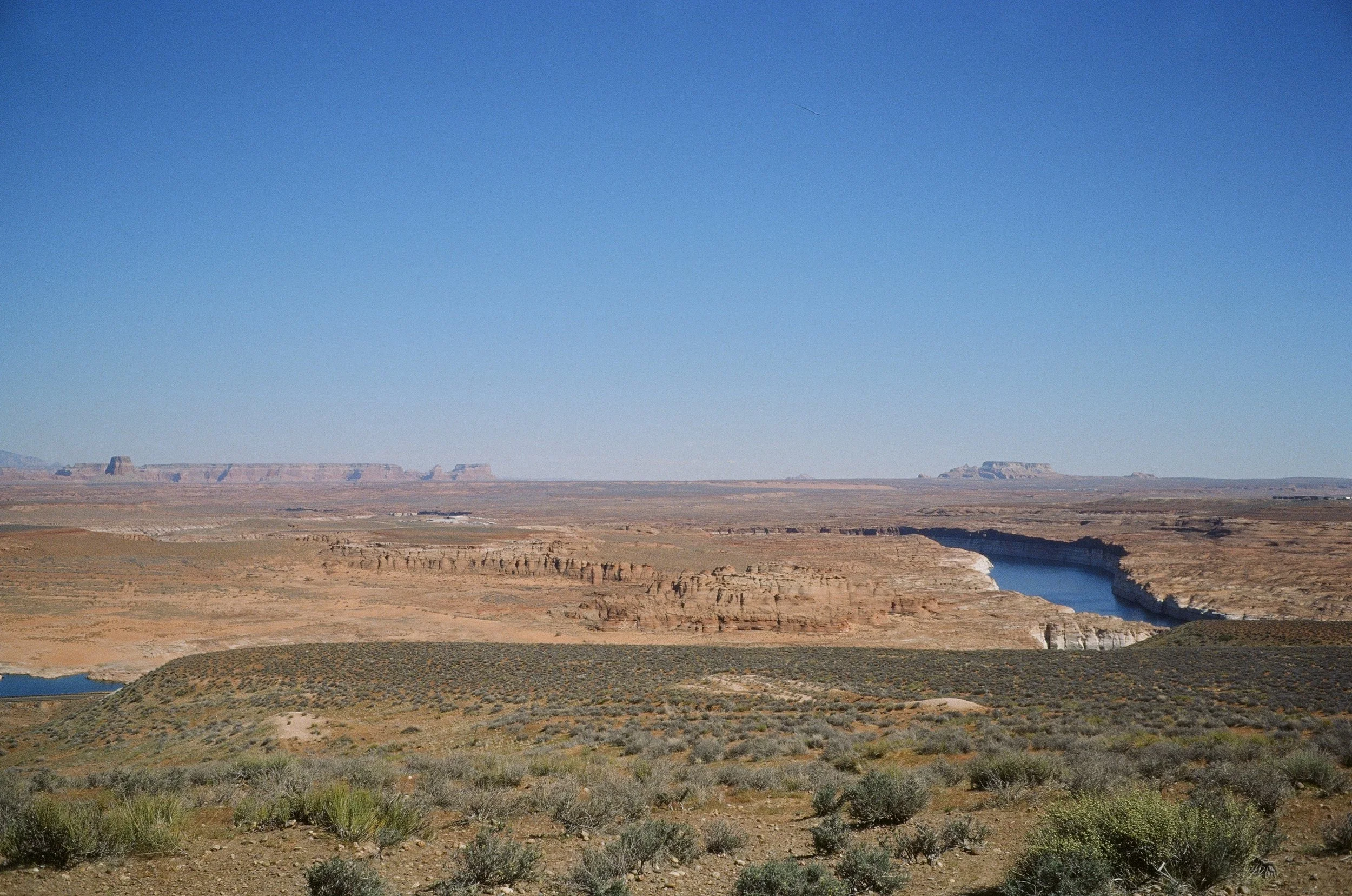
The drive from Sedona to southern Utah is long. Highway 89A to Flagstaff, then Highway 89 north through high desert, past Horseshoe Bend, through Kanab, and into Orderville. It is not interstate. It is two-lane blacktop with long stretches of nothing.
This is where the trip became what I came for.
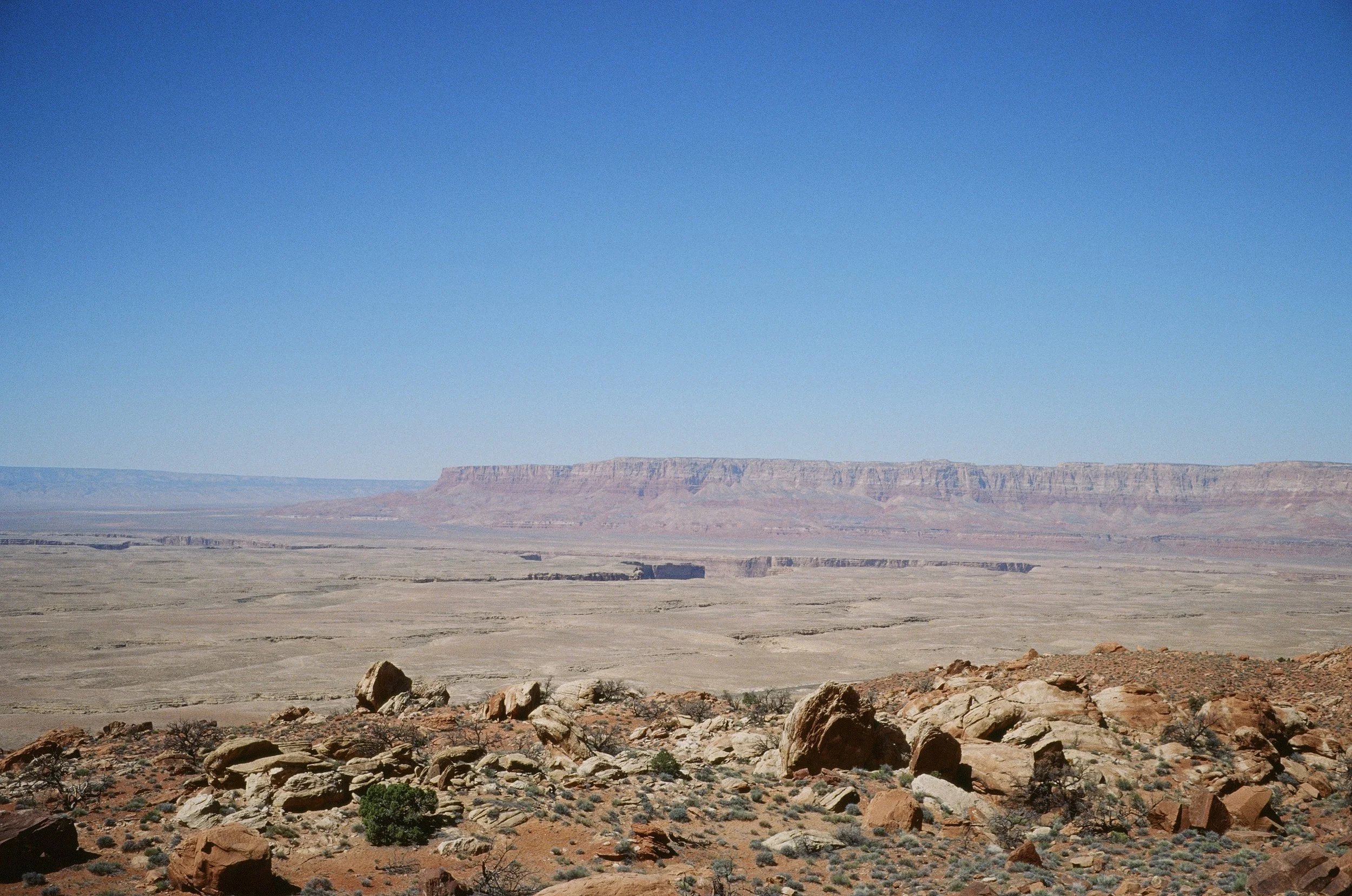
The highway itself is the subject. Empty roads. Distant mesas. Sky so blue it feels artificial. Abandoned structures. Old signs still standing decades after the businesses closed.
We stopped at Horseshoe Bend. Tourist circus. Crowds. Fenced overlook. Still worth it. The Colorado River bends 270 degrees around a sandstone escarpment, and the view delivers exactly what the photos promise.
The driving was meditative. Not tedious. Not boring. Just long stretches of focus and movement. My wife navigated. I drove. The family slept in the back. The road kept going.
Zion and Southern Utah: Different Light, Same Film
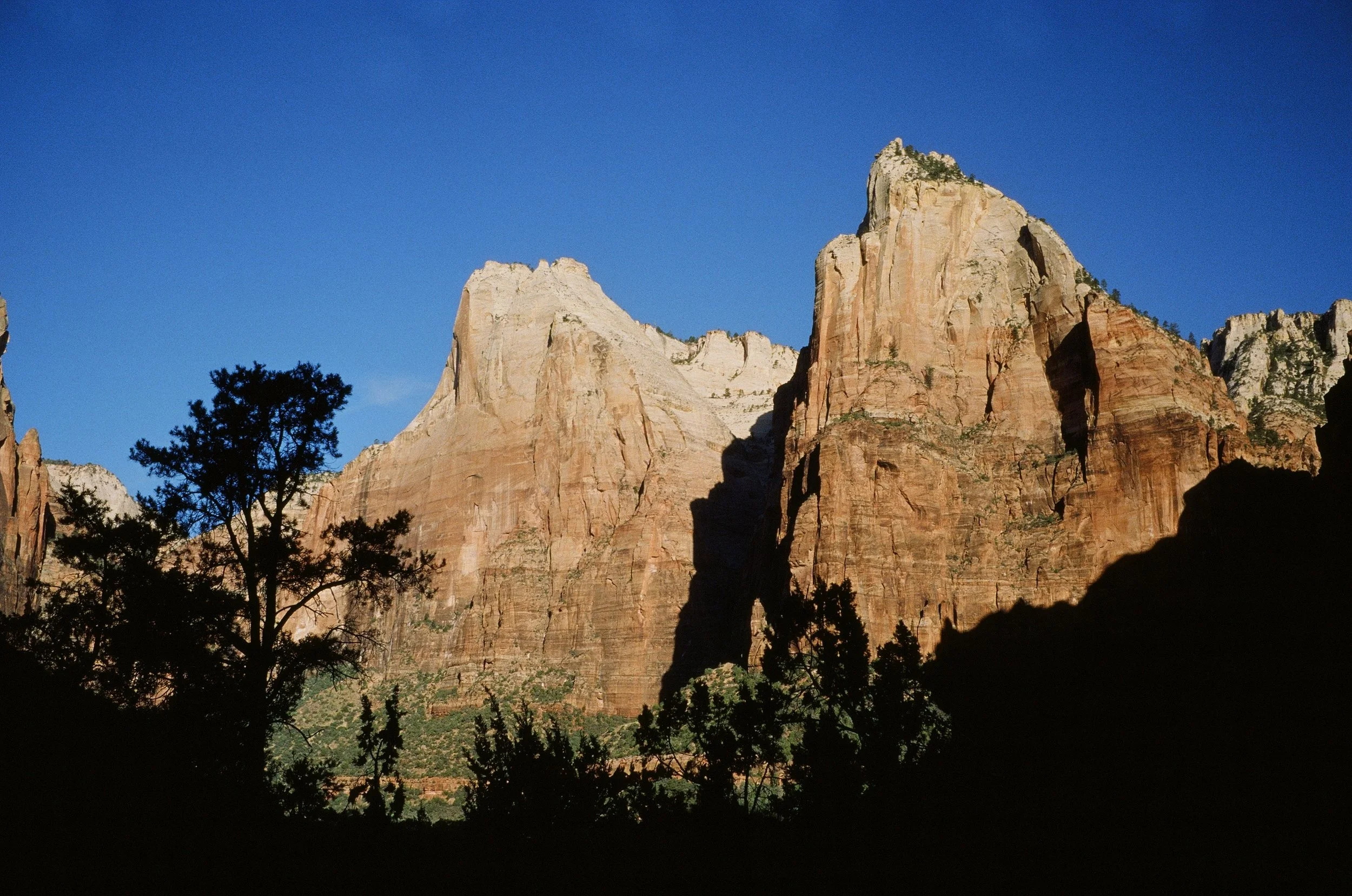
Zion National Park is green. Not desert green — actual green. The Virgin River cuts through red sandstone, and cottonwood trees grow along the canyon floor. The light is different. Softer. More diffused.
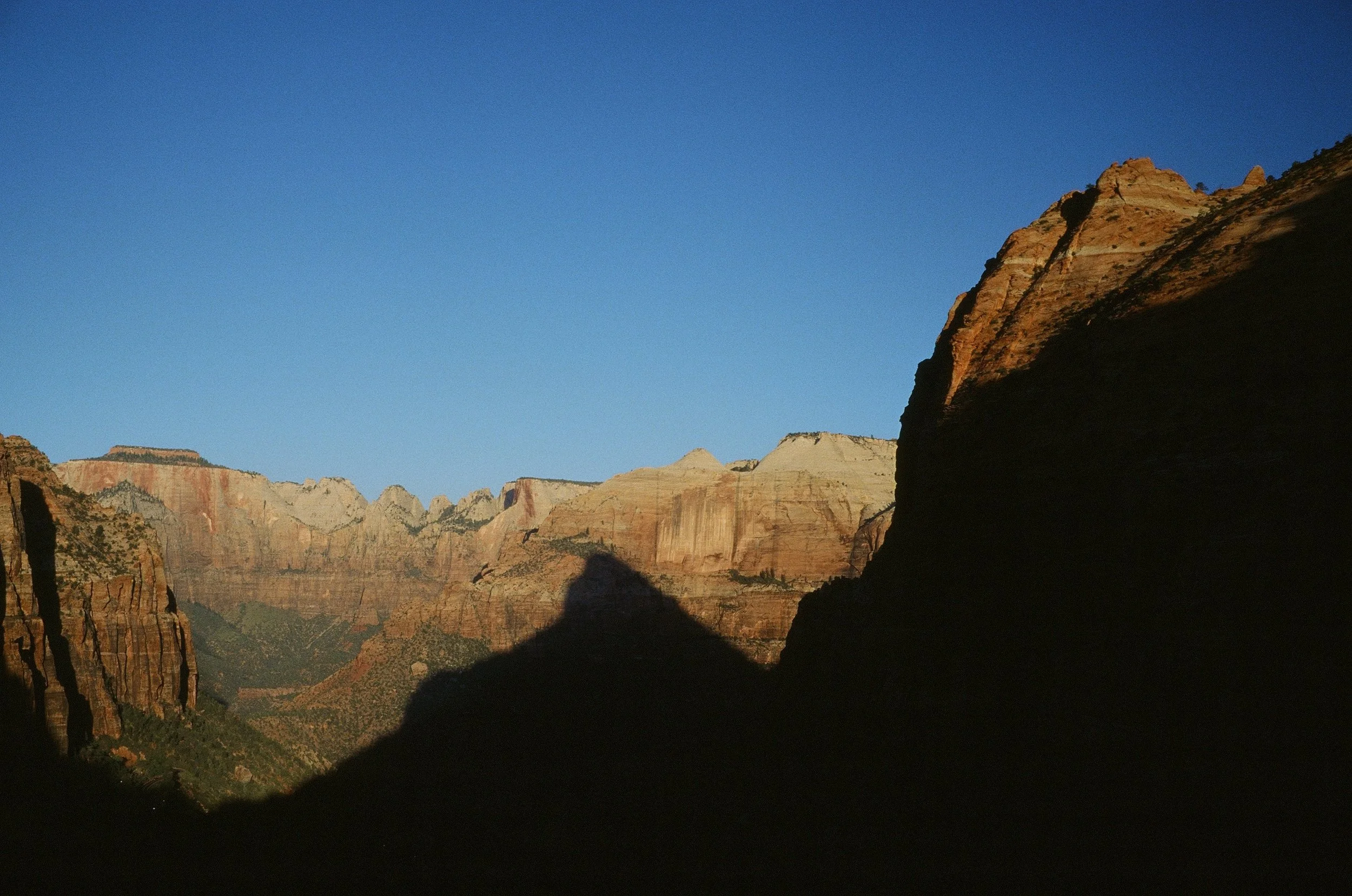
Ektachrome handled the shift without issue. The reds stayed saturated. The greens stayed natural. The shadows went dark but stayed detailed. The film did not care that the landscape had changed. It rendered what was there.
We stayed in Orderville, just outside Zion's east entrance. Small town. One main street. The kind of place you drive through and forget unless you stop.
We stopped.
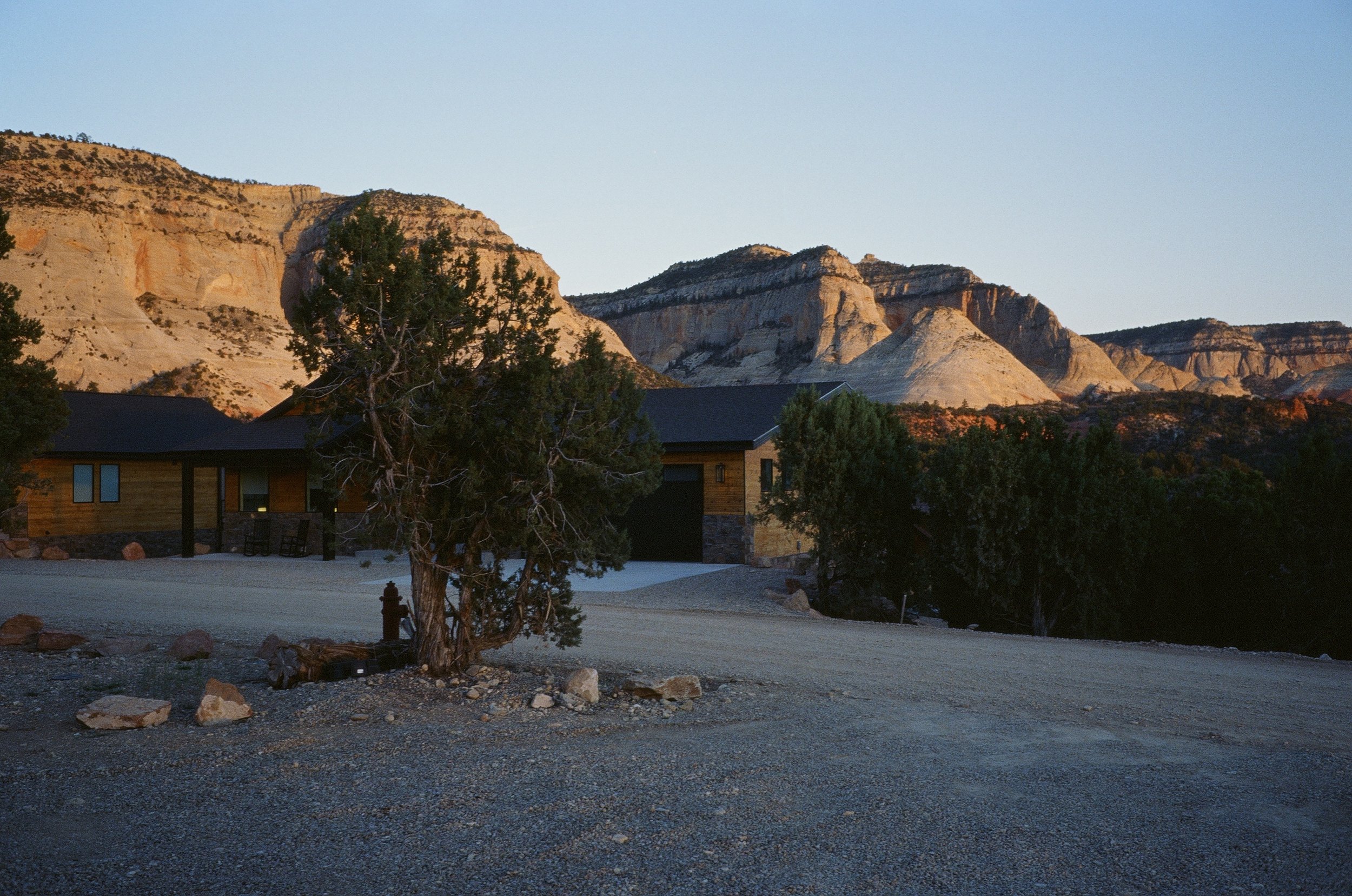
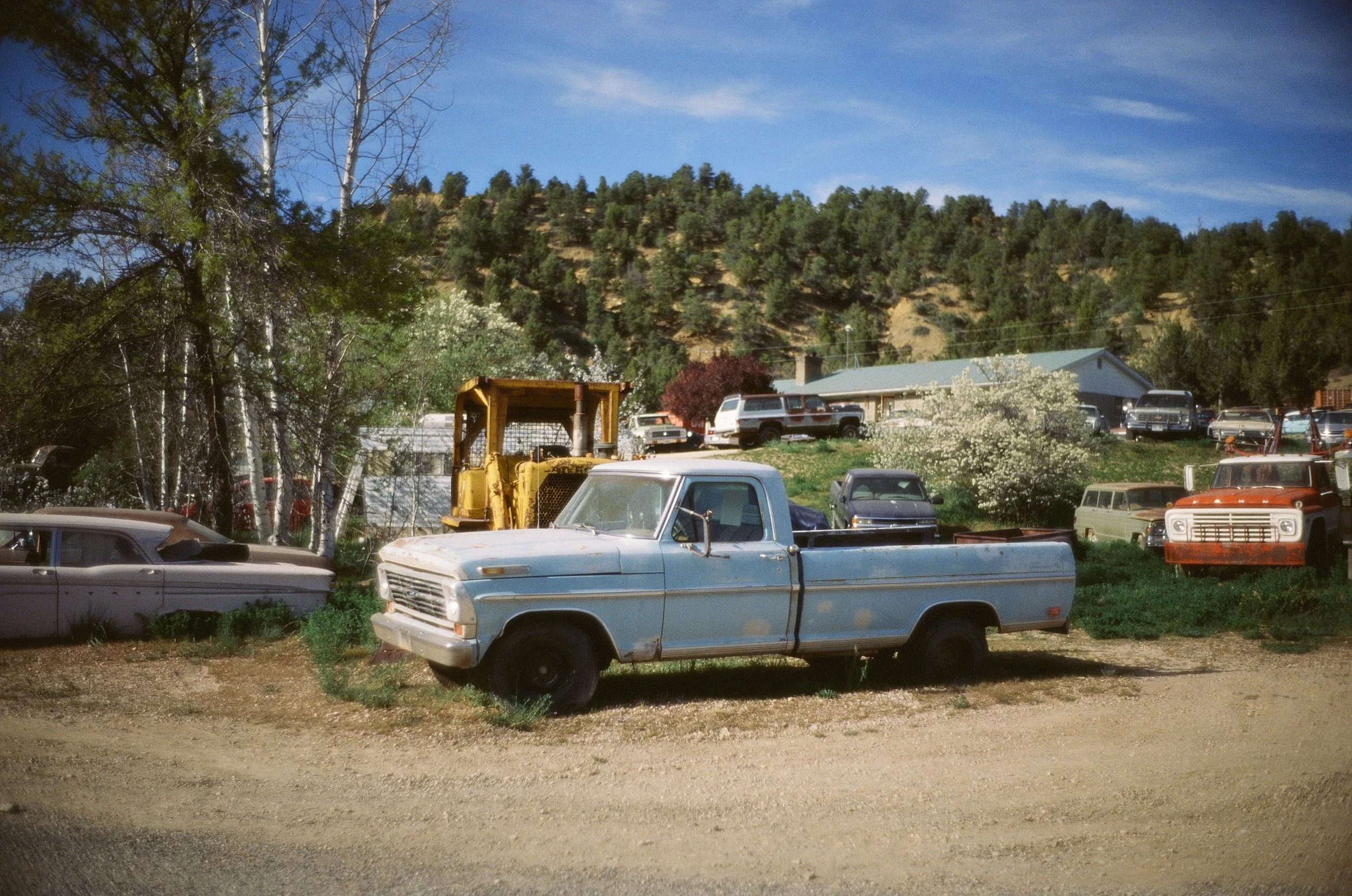
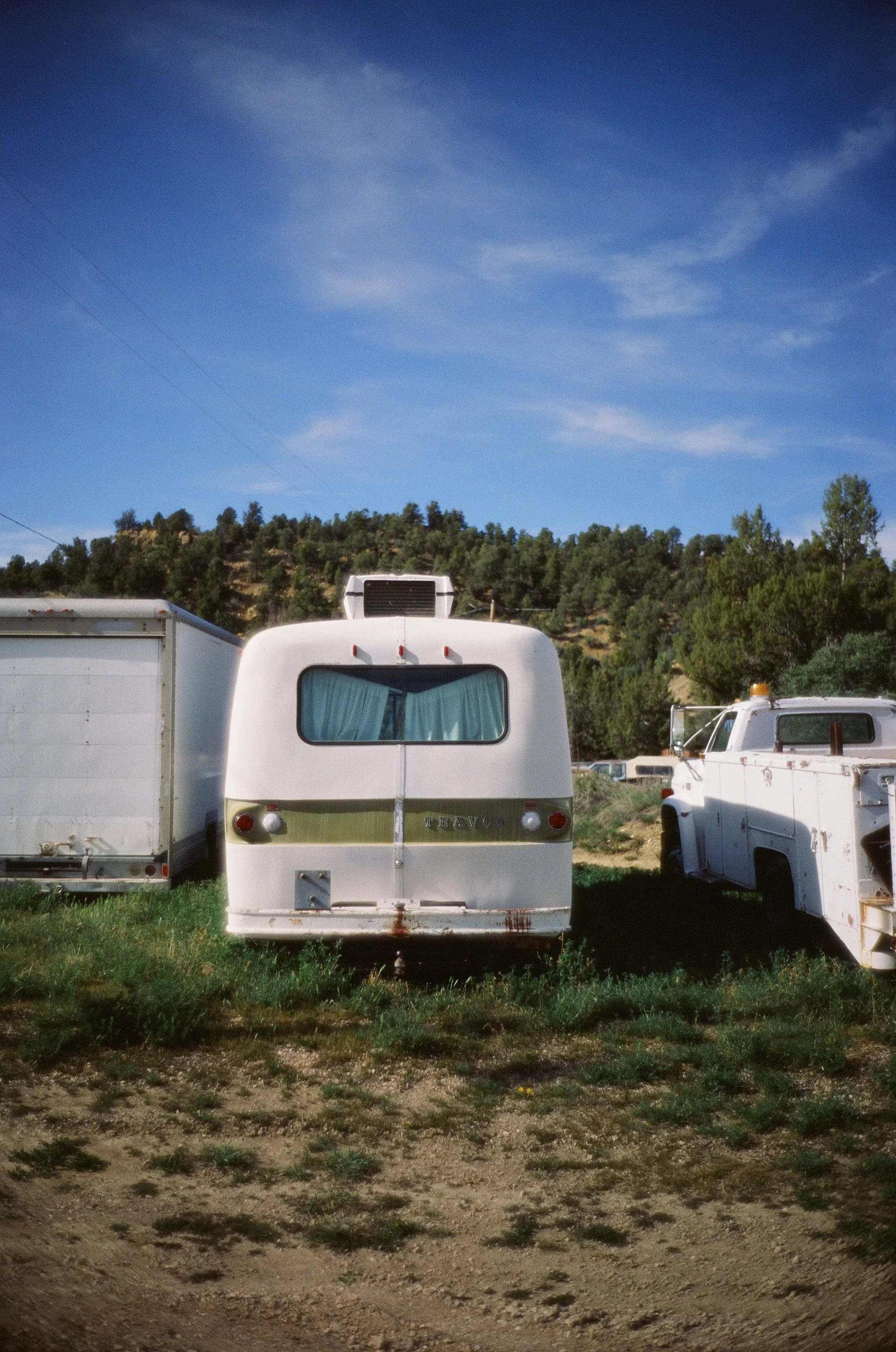
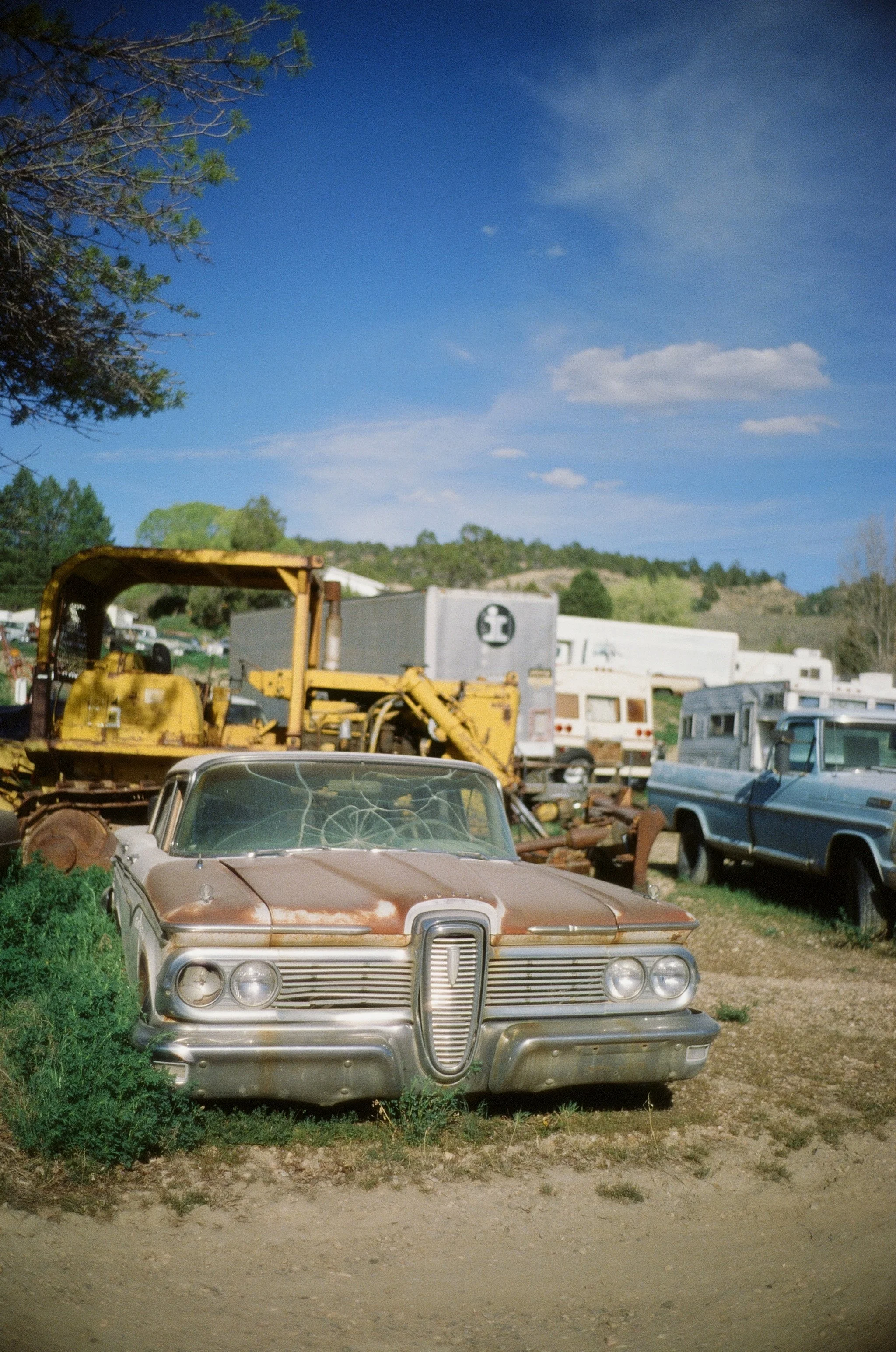
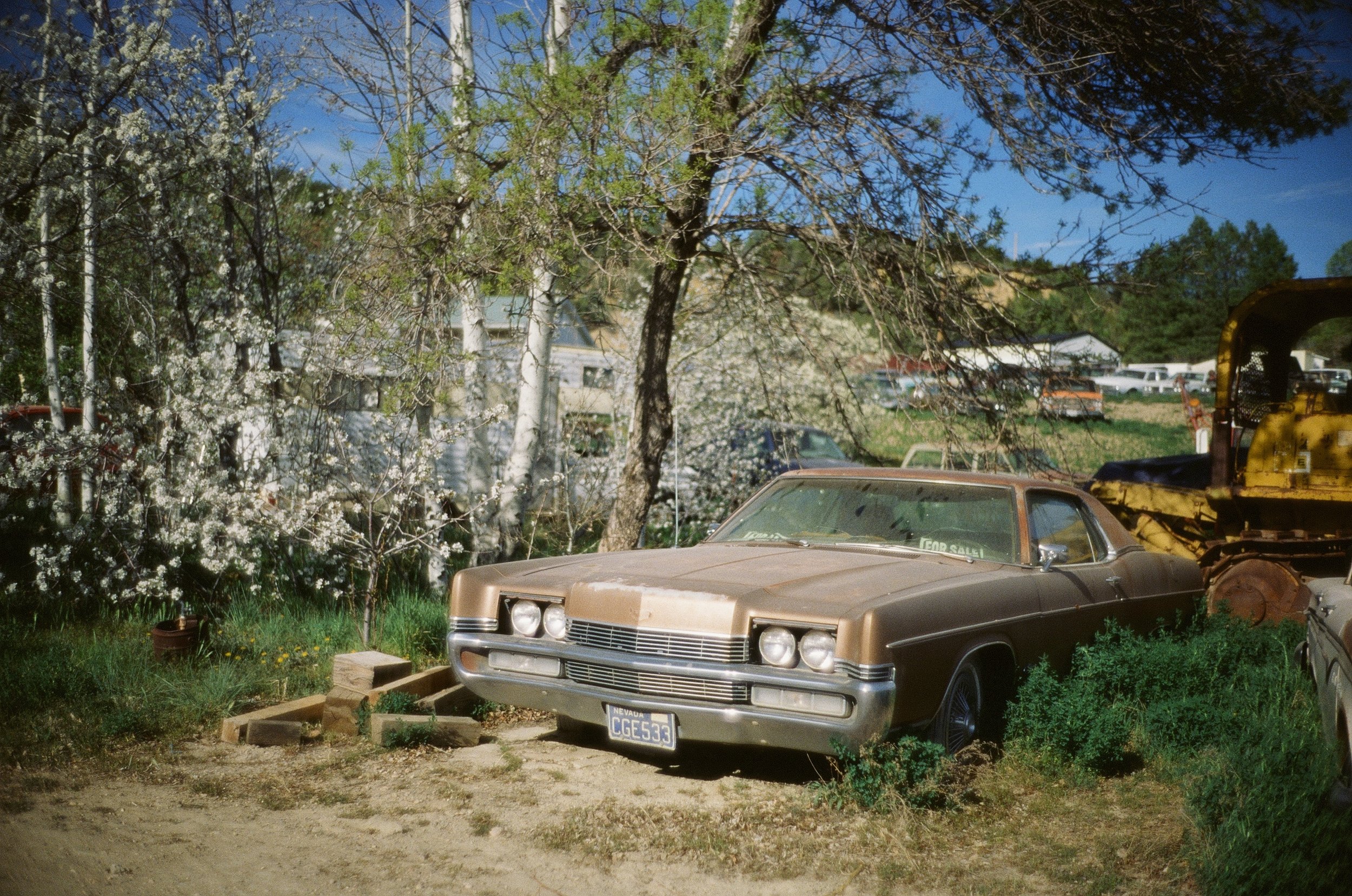
East of town, vintage cars rust in junkyards — American steel slowly returning to nature. The kind of roadside Americana that Eggleston would have shot. I did.
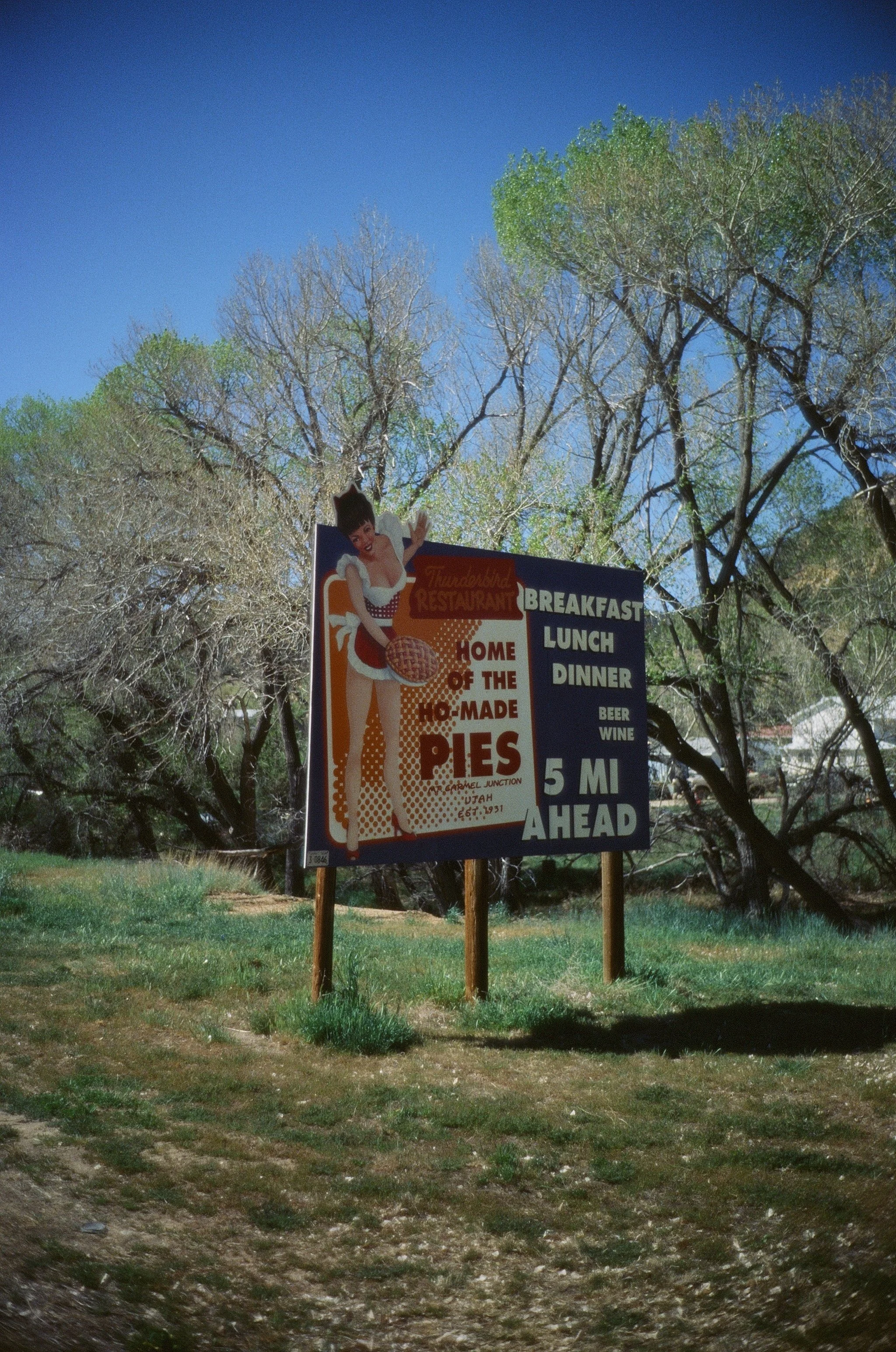
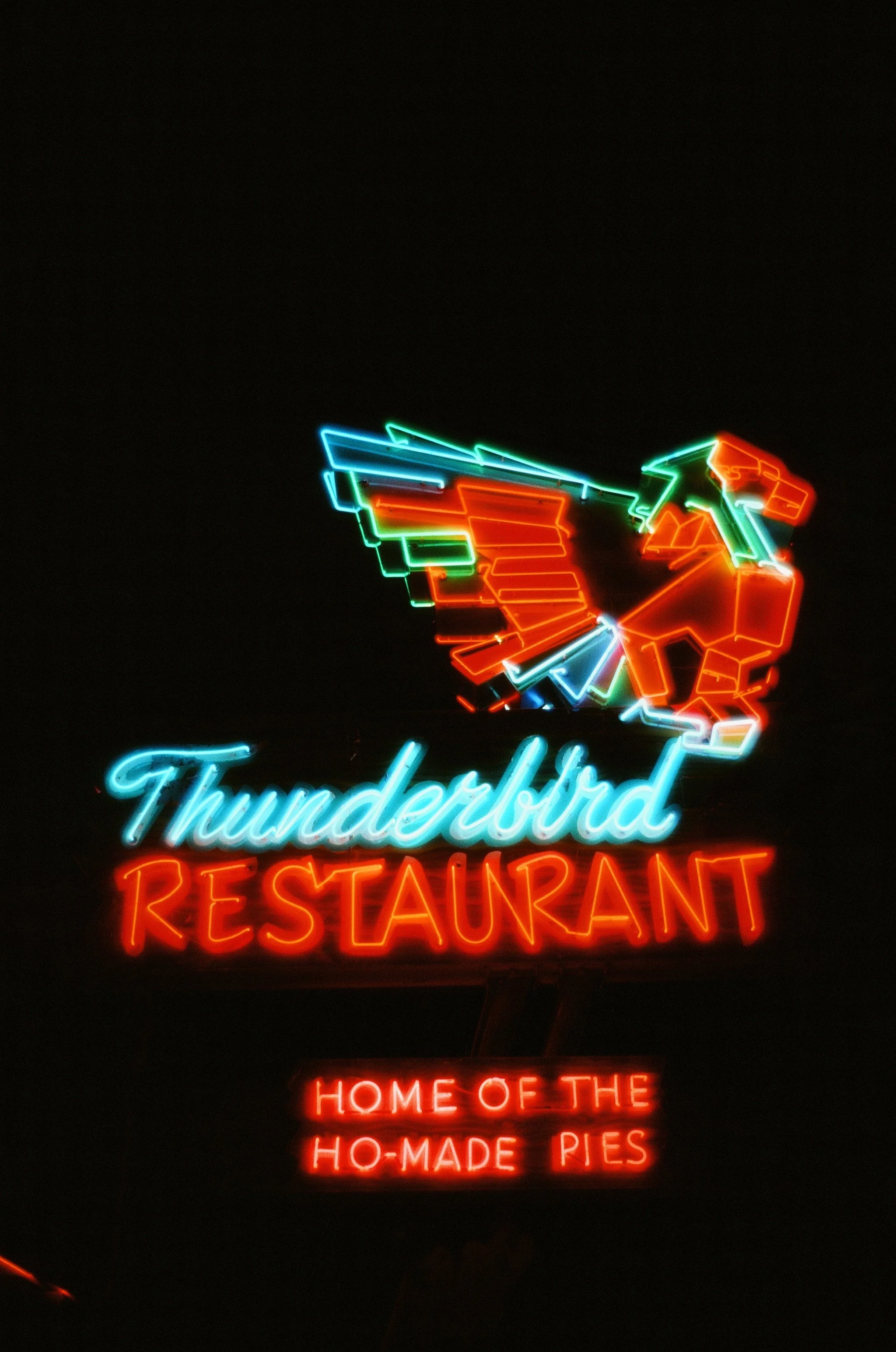
One night we ate at the Thunderbird. Classic American dinner. Country fried steak. Homemade apple pie for dessert. The food was exactly what it needed to be after a day on the road.
I shot Zion from the Scenic Drive. The Watchman. The Court of the Patriarchs. Angels Landing in the distance. The kids hiked the Riverside Walk. My dad and I drove the Mount Carmel Highway and shot from overlooks.
The 35mm Summilux continued to be the right lens. Wide enough for landscapes. Fast enough (f/1.4) for handheld shooting in canyon shade. The Leica MP never felt like a compromise. Manual focus slowed me down in a way that improved the work.
What Film Captured That Digital Would Not
Ektachrome is unforgiving. You expose correctly or you lose the shot. There is no pulling shadows in post. There is no recovering blown highlights. The latitude is narrow.
That constraint improved the work.
I metered carefully. I thought about composition before pressing the shutter. I shot fewer frames and made each one count. The Leica MP holds 36 exposures per roll. I shot eight rolls. 290 frames total across nine days.
Digital would have given me 2,000 frames and less discipline.
The Misses: Ektachrome's Limitations
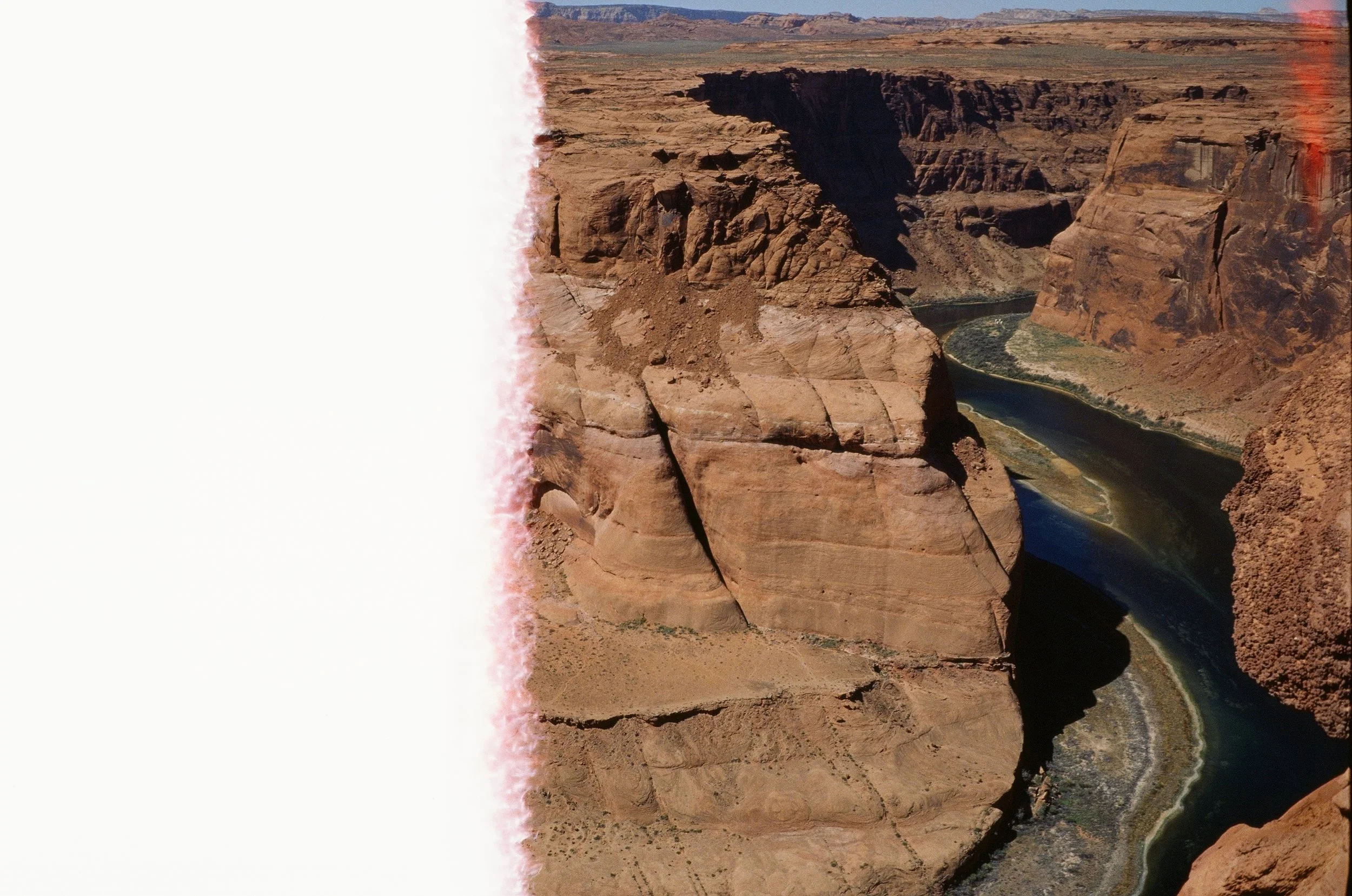
I did have failures. Ektachrome is tough to balance in dynamic scenes — areas with both deep shadow and direct sunlight. The film's narrow latitude forces a choice: expose for the highlights and let the shadows go black, or expose for the shadows and blow the highlights.
This is not a problem you can solve in post. This is not recoverable. You make the call when you press the shutter, and you live with it.
I lost shots. Desert canyons with bright sky and dark rock. Roadside structures half in sun, half in shadow. Scenes where Portra 400 would have given me latitude to hold both highlights and shadows — Ektachrome made me choose.
The shots I kept are the ones where I chose correctly. The shots I lost taught me to read light faster and commit harder.
The Color
The color is also different. Ektachrome's saturation is not artificial. It is chemical. The dyes react to light in a specific way that digital sensors approximate but do not replicate. The blues are bluer. The reds are redder. The contrast is higher.
Richard Photo Lab processed the film and scanned at high resolution. The scans came back exactly as I hoped. No color shifts. No grain issues. Just clean, sharp, saturated images that looked like the desert.
Film photography in 2026 is not practical. It is not efficient. It is not cheaper than digital.
It is better for this kind of work.
The Gear: Leica MP and Summilux 35mm steel rim
Camera: Leica MP (film rangefinder)
Lens: Summilux 35mm f/1.4 ASPH steel rim reissue
Film: Kodak Ektachrome 100 (E-6 slide film)
Metering: Built-in Leica MP meter, incident reading for every shot
Lab: Richard Photo Lab, standard E-6 process, high-res scans
The Leica MP is a mechanical rangefinder with a built-in light meter. No autofocus. No motorized film advance. No LCD screen. You compose through the viewfinder, focus manually, meter the scene, and shoot.
The Summilux 35mm f/1.4 is sharp, fast, and renders with the classic Leica look — high contrast, excellent separation, smooth bokeh when needed. The steel rim reissue is a modern version of the original 1960s design. It is compact, well-balanced on the MP, and optically excellent.
I shot everything at f/5.6 or f/8 for landscape work. Occasionally f/1.4 or f/2 for details and road shots where I wanted subject isolation.
Kodak Ektachrome 100 is a slow film by modern standards. ISO 100 means you need good light or a tripod. I shot handheld for everything. The desert provides good light. The Leica's rangefinder focusing is fast and accurate.
Richard Photo Lab in California processed the film and delivered high-resolution scans. Standard E-6 process. No push. No pull. Box speed. Clean results.
The gear did what it was supposed to do. No failures. No compromises.
Reality Check: What Kerouac Did Not Tell You
On the Road is about freedom, movement, and the pursuit of something undefined. It is also about being broke, exhausted, and uncertain.
The road trip delivered the freedom and movement. It did not deliver exhaustion or uncertainty because we had a plan, a minivan, and hotel reservations.
That is fine.
The American West is still vast. The highways are still empty. The roadside Americana is still standing — barely. The desert is still red. The sky is still impossibly blue.
You do not need to be broke and directionless to experience the road. You just need to drive it with intention and pay attention to what is actually there instead of what the mythology promised.
The mythology, in this case, was accurate.
Eggleston shot the South on slide film and rendered it hyper-real. I shot the West on slide film and got the same result. The colors are saturated. The contrast is high. The details are sharp.
The film did its job. The desert did its job. I showed up and pressed the shutter.
Final Take
The American West on Ektachrome delivered everything I came for and more.
The mythology was real. The landscapes were vast. The roadside details were exactly as worn and faded as I hoped. The driving was meditative. The film rendered it all with clarity and saturation that matched the experience.
Traveling with my wife, my kids, and my dad added something I did not expect. The trip was not just about chasing Eggleston or Kerouac. It was about showing my kids what the road looks like before it gets paved over. It was about my dad seeing the West that previously he had only seen in movies. It was about documenting a specific moment in time with a specific medium that may not be around forever.
Ektachrome is still available. The Leica MP still works. The desert is still there.
If you have been putting this off, stop making excuses.
Load the camera. Drive the road. Shoot what you find.
It will blow your mind.
Frequently Asked Questions
What is Ektachrome film?
Ektachrome is a color slide film (E-6 process) known for high saturation and contrast. Originally discontinued in 2012, Kodak reintroduced Ektachrome 100 in 2018. It renders colors more vividly than negative film and requires precise exposure.
Why shoot film instead of digital for landscape photography?
Film forces discipline — limited exposures mean more intentional composition and metering. Ektachrome's color rendering is chemically distinct from digital sensors, producing saturated, contrasty images that match the intensity of desert light.
Is the Leica MP worth it for travel photography?
The Leica MP is a fully mechanical rangefinder with exceptional build quality and optical performance. For travel photography on film, it is reliable, compact, and produces excellent results with Leica M-mount lenses. It is expensive but built to last decades.
How do you meter Ektachrome in bright desert light?
Meter carefully for every shot using the camera's built-in meter. Ektachrome has narrow exposure latitude compared to negative film, so accurate metering is critical. I used incident metering and exposed for midtones.
What is the best film stock for desert photography?
Ektachrome 100 excels in desert environments due to its high saturation and contrast, which match the intensity of red rock formations and blue skies. Alternatives include Velvia 50 (even more saturated) or Portra 400 (more muted, forgiving latitude).
Where should I shoot film in Arizona and Utah?
Sedona (red rocks), Grand Canyon (South Rim), Horseshoe Bend, Zion National Park, and Highway 89A between them. Roadside Americana (vintage signs, abandoned structures, car junkyards) provides excellent subject matter between major landmarks.
What lens is best for desert landscape photography?
A 35mm focal length provides a natural wide-angle perspective for landscapes while remaining compact. The Summilux 35mm f/1.4 ASPH offers sharpness, fast aperture for handheld shooting in variable light, and classic Leica rendering.
How much does it cost to develop and scan Ektachrome?
Richard Photo Lab charges approximately $15-20 per roll for E-6 processing and high-resolution scans. Ektachrome film costs $15-18 per 36-exposure roll. Total cost per roll (film + processing + scans): $30-40.
